Popular Pets
🐶 Dog 🐱 Cat 🐰 Rabbit 🐹 Hamster 🐾 Guinea Pig 🦜 Parrot 🦡 Ferret 🐀 Rat 🐭 Chinchilla 🦔 Hedgehog 🐟 Goldfish 🦜 Macaw
Farm & Large Animals
🐴 Horse 🐄 Cow 🐄 Highland Cow 🐷 Pig 🐑 Sheep 🐐 Goat 🐴 Donkey 🦙 Alpaca 🐐 Mountain Goat 🐔 Chicken 🦆 Duck 🦃 Turkey
Wild Animals
🐘 Elephant 🦁 Lion 🐯 Tiger 🐆 Leopard 🐺 Wolf 🐻 Bear 🐻‍❄️ Polar Bear 🦍 Gorilla 🐒 Chimpanzee 🦧 Orangutan 🦘 Kangaroo 🐾 Capybara 🦒 Giraffe 🦊 Fox 🦅 Raptor 🦉 Owl 🐧 Penguin 🦩 Flamingo 🐾 Hyena 🐾 Meerkat 🦥 Sloth 🦡 Badger 🐾 Wolverine 🐾 Armadillo
Ocean & Aquarium
🦈 Shark 🐋 Orca 🐬 Dolphin 🐋 Whale 🐋 Blue Whale 🐳 Beluga Whale 🦄 Narwhal 🐋 Bowhead Whale 🐾 Manatee 🐟 Manta Ray 🐟 Freshwater Fish 🐠 Saltwater Fish 🐴 Seahorse 🐟 Koi
Exotic & Weird
🐍 Snake 🐍 Ball Python 🦎 Bearded Dragon 🦎 Iguana 🦎 Komodo Dragon 🦎 Chameleon 🦎 Leopard Gecko 🐢 Tortoise 🐢 Snapping Turtle 🐢 Sea Turtle 🐊 Crocodilian 🕷️ Tarantula 🦎 Axolotl 🐙 Octopus 🌊 Jellyfish 🦞 Lobster 🐚 Quahog 🔬 Tardigrade
Info
About FAQ Contact
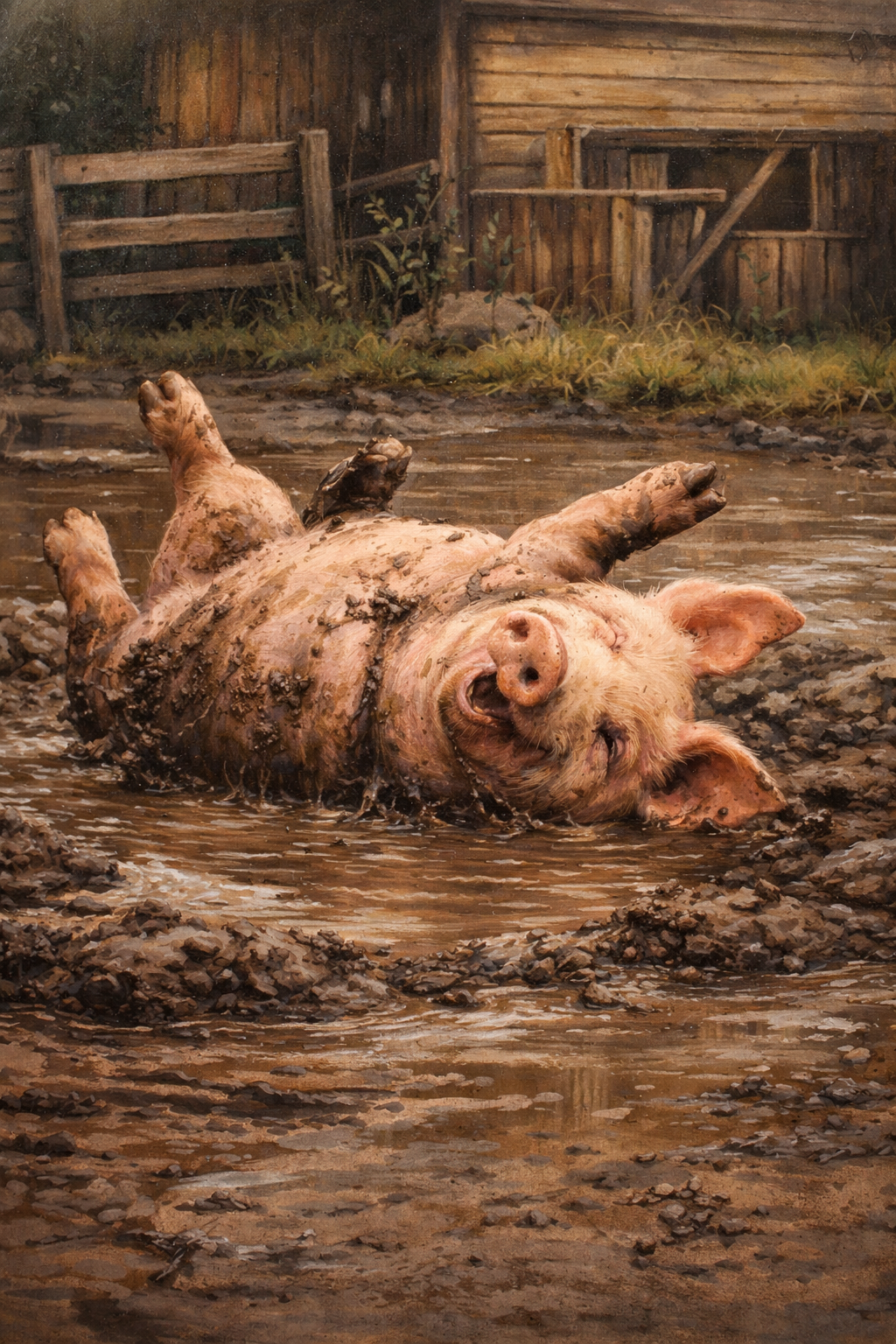
Happy pig rolling on its back in a mud wallow on a farm, mouth open in apparent joy
🐷 Large Animals

How Old Is a Pig in Human Years?

📅 Updated 🧠 Smarter than dogs 🐷 Farm, mini & boar covered

Pigs outperform dogs on multiple cognitive tests, can play video games with joysticks, show empathy, and remember where they hid their food. They are also one of the most numerically dominant animals on Earth. Both facts deserve to be held in mind simultaneously.

Calculate Pig Age →
🐷 Pig Age in Human Years
in human years
Pig age
Life stage
Type
🐷 What this age means

Pig Age to Human Years — Full Table

Based on a natural farm pig lifespan of 8 years. Note how fast pigs develop — a 6-month-old pig is sexually mature and approaching adult size.

Pig AgeFarm PigMini PigWild BoarLife Stage
3 months~8 yrs~4 yrs~6 yrsPiglet
6 months~15 yrs~8 yrs~12 yrsSub-adult
1 year~28 yrs~14 yrs~22 yrsYoung adult
3 years~55 yrs~30 yrs~45 yrsPrime adult
5 years~72 yrs~44 yrs~65 yrsSenior (farm)
8 years~88 yrs~59 yrs~80 yrsElder (farm)
12 yearsRecord~79 yrsSenior (mini)
18 years~96 yrsElder (mini)
23 yearsWorld recordExtraordinary
🍄 Truffle Hunters
Pigs have been used to hunt truffles — the most expensive food ingredient in the world, selling for up to $5,000 per kilogram — for centuries across France and Italy. Their extraordinary sense of smell (they have around 1,113 olfactory receptor genes — more than any other mammal studied, including dogs) allows them to detect truffles buried up to 1 metre underground. The problem: pigs want to eat the truffles themselves, making them harder to work with than trained dogs. Most commercial truffle hunting in Europe now uses dogs, but traditional pig-hunting persists in some regions.
🫀 The Surgical Pig
Pig organs are so anatomically similar to human organs that pigs are the primary model for surgical training, medical device testing, and increasingly, transplantation. Pig heart valves have been implanted in human patients since the 1960s — hundreds of thousands of people alive today have pig tissue in their hearts. In 2022, surgeons at the University of Maryland Medical Center performed the first successful transplant of a genetically modified pig heart into a living human patient. The patient survived 60 days — a landmark in xenotransplantation research. Pig skin is also used in burn treatment, and pig insulin was the primary treatment for human diabetes for decades before synthetic alternatives.

🐷 The oldest verified pig on record was Ernestine, a pet pig from Michigan who lived to 23 years old, dying in 2014. She is listed in the Guinness World Records as the world's oldest pig. Most farm pigs never see their second birthday; most mini pigs, with good care, can live into their mid-teens.

The Life Stages of a Pig

Domestic pigs mature quickly and are highly social throughout their lives — in the wild, their ancestor the wild boar lives in family groups called sounders, led by a dominant sow. The domestic pig's intelligence and emotional complexity are most visible during their early social development, when they form lasting bonds with littermates and caretakers.

0–3 wks
Piglet
Born in litters of 8–14. Each piglet claims a specific teat within hours of birth and defends it for its entire nursing period. Highly vocal — over 20 distinct vocalisations documented in the first weeks of life.
3–8 wks
Nursing Piglet
Still nursing but beginning to eat solid food. Establishing social hierarchies with littermates through play — the same play behaviours that demonstrate their capacity for optimism and emotional contagion in research settings.
2–6 mo
Weaner / Grower
Fully weaned. Rapid growth phase. A domestic pig can reach 100 kg in under six months under intensive conditions. Cognitive abilities are at their most active and measurable during this phase.
6–12 mo
Young Adult
Reaching sexual maturity — gilts (young females) typically around 5–6 months, boars slightly later. Full adult size by 12–18 months depending on breed. Peak physical development.
1–6 yrs
Prime Adult
Productive years. Sows typically have 2 litters per year of 8–14 piglets each. A productive breeding sow can farrow 5–7 litters in her lifetime. Boars remain fertile for many years with good management.
6–20 yrs
Senior / Elder
Rarely reached on commercial farms, but pet pigs regularly live 10–20 years. The oldest verified pig on record lived to 23 years. Senior pigs show measurable cognitive decline similar to other intelligent mammals.

Things About Pigs That Will Actually Surprise You

🎮 Video Game Players
In a 2021 study published in Frontiers in Psychology, four pigs — two Yorkshire pigs and two Panepinto micro pigs — were trained to play a simple video game using a joystick, moving a cursor to touch targets on a screen. They performed significantly above chance, including after the food reward mechanism was broken — continuing to play when the researcher praised them. Pigs that had never met before collaborated, suggesting rudimentary social learning. The researchers noted the results were more impressive than those typically seen in non-human primates at the same stage of training.
🫂 Empathy & Emotional Contagion
Studies from Wageningen University found that pigs show emotional contagion — they pick up on the emotional states of other pigs and adjust their own behaviour accordingly. Pigs exposed to the distress of other pigs show elevated stress hormones themselves. They also comfort distressed companions through physical contact, and show more positive emotions when in groups with optimistic individuals. The researchers described this as functionally analogous to empathy.
🪞 Mirrors & Self-Awareness
A 2009 study showed pigs used mirrors to locate hidden food — demonstrating understanding that a mirror reflects the environment, not just a fixed image. This requires a concept of spatial representation that is considered an indicator of higher cognition. While pigs did not pass the classic mirror self-recognition test (mark on forehead), their mirror use was more sophisticated than most non-primate mammals. The debate about what this reveals about pig self-awareness continues.
🌡️ Mud — Not Dirt, Just Physics
Pigs have no functional sweat glands and cannot regulate body temperature through sweating. Mud wallowing is thermoregulation — the evaporation of water from mud cools them just as sweat cools humans. Pigs prefer water to mud when water is available. The "dirty pig" stereotype is backwards: given the option, pigs are meticulous about keeping their sleeping areas clean and will designate separate areas for elimination, even in confined spaces.
🌍 1 Billion Pigs
There are approximately 1 billion domestic pigs on Earth at any given time — making Sus scrofa domesticus one of the most numerically successful large mammals in history. China alone accounts for roughly half the world's pigs. The domestication of the wild boar occurred independently in at least two separate locations — the Near East and East Asia — approximately 9,000 years ago. All domestic pig breeds descend from these events.
🏃 Faster Than You Think
Domestic pigs can run at up to 18 mph (29 km/h) in short bursts — faster than many people realise for an animal that appears sedentary. Wild boar are significantly faster and more dangerous: they can sprint at 25–30 mph, swim well, and will charge when cornered or protecting young. Wild boar inflict more injuries on humans annually in Europe than bears and wolves combined.

🐷 The mini pig phenomenon deserves honest context: "teacup" and "micro" pigs do not exist as stable breeds. Pigs sold as micro or teacup pigs are typically standard domestic breeds that have been kept undernourished to stunt growth for sale, or that are simply piglets photographed young. An adult "mini pig" typically weighs 50–90 kg — smaller than a commercial farm pig, but not small. Prospective owners who expect a 10 kg pig and receive a 70 kg adult account for a significant proportion of pig rescue organisations' intakes. Research the adult size of any specific breed carefully before committing.

700+ Breeds — and Nearly a Billion Animals

There are over 700 recognised breeds and varieties of domestic pig worldwide, ranging from the compact Vietnamese Pot-bellied pig kept as a pet to the enormous Large White commercial breed that can exceed 300 kg. The global domestic pig population stands at approximately 940 million animals — making the pig one of the most numerous large mammals on Earth.

BreedOriginWeightKnown For
Large White (Yorkshire)England250–350 kgMost widely farmed breed globally; lean meat, high litter size
DurocUSA200–300 kgFast growth, excellent marbling; popular in crossbreeding
BerkshireEngland200–270 kgPremium pork quality; favoured by chefs; distinctive black coat
Iberian (Ibérico)Spain / Portugal130–160 kgProduces jamón ibérico; acorn-finished; unique fatty acid profile
MangalicaHungary150–200 kgWoolly coat; lard-type breed; critically endangered heritage breed
TamworthEngland200–250 kgOne of the oldest breeds; excellent forager; closest to wild boar
Vietnamese Pot-belliedVietnam40–90 kgPopular pet breed; highly intelligent; long lifespan up to 20 years
KunekuneNew Zealand60–120 kgFriendly temperament; popular as pets and smallholder pigs

🐷 China alone accounts for approximately 50% of the world's pig population — around 450 million animals. The US holds roughly 70 million. Pork is the most widely consumed meat globally, accounting for approximately 36% of all meat consumed worldwide. The wild boar (Sus scrofa), ancestor of all domestic pig breeds, is one of the world's most widely distributed large mammals — found across Europe, Asia, and North Africa, and introduced to the Americas, Australia, and New Zealand where it is often considered an invasive species.

Other Large Animals

Frequently Asked Questions

The honest answer is: in some specific tasks, yes — and the research is more robust than many people expect. Pigs have outperformed dogs in object permanence tasks, demonstrated understanding of symbolic representations (pointing gestures) more quickly in some studies, and shown sustained engagement with cognitively demanding tasks that dogs often give up on. The video game study (2021) specifically noted that pigs performed better in the early stages of training than non-human primates typically do. However, intelligence is multidimensional, and dogs have been evolutionarily optimised for social coordination with humans in ways pigs have not — so they excel at reading human social cues. The more accurate framing is that pigs are significantly more cognitively capable than their status as farm animals implies.
The "teacup pig" or "micro pig" category is not a recognised breed and is not stable. Most pigs sold under these names are standard domestic breeds (often Vietnamese Pot-bellied pigs or crosses) that are sold young, giving buyers an inaccurate expectation of adult size. Some are deliberately kept underfed to stunt growth before sale. A healthy adult "mini pig" typically weighs 50–90 kg and requires significant space, rooting opportunities, social companionship, and specialised veterinary care. Before purchasing any pig sold as a mini breed, research the adult weight records of that specific breeder's animals, require photos of adult parents, and contact a pig rescue organisation for realistic expectations.
Yes — pigs are genuinely clean animals when given the space to be. They instinctively designate separate areas for eating, sleeping, and eliminating waste. They will keep their sleeping area clean even in confined spaces. The mud association comes from thermoregulation (they wallow in mud because they have no sweat glands) — and if given a choice between mud and water, pigs choose water. The pig-as-filthy-animal reputation comes almost entirely from confinement farming conditions, not from pigs' natural behaviour preferences.
These terms are often used interchangeably but have specific meanings. A pig is the general term for any member of the genus Sus. A hog typically refers to a domestic pig that has been grown to slaughter weight (over 54 kg/120 lbs) — the term is common in agricultural contexts. A boar specifically refers to an intact (uncastrated) male pig — domestic or wild. A "wild boar" is Sus scrofa, the wild ancestor of domestic pigs. A sow is an adult female pig. A gilt is a female pig that hasn't yet produced offspring. A barrow is a castrated male pig. These distinctions matter in agricultural and veterinary contexts.
Pigs and humans share a remarkable degree of physiological similarity, which is why pigs are so commonly used in medical research and why xenotransplantation (cross-species organ transplant) research has focused heavily on pigs. Pig hearts are similar in size and structure to human hearts — porcine heart valves have been used in human patients for decades. Pig kidneys, pancreases, and skin are studied for potential transplant applications. In 2022, a genetically modified pig kidney was successfully attached to a human patient (outside the body) without immediate rejection. The first successful pig-to-human heart transplant occurred in 2022, and while the patient survived only 60 days, it marked a significant milestone in xenotransplantation research.