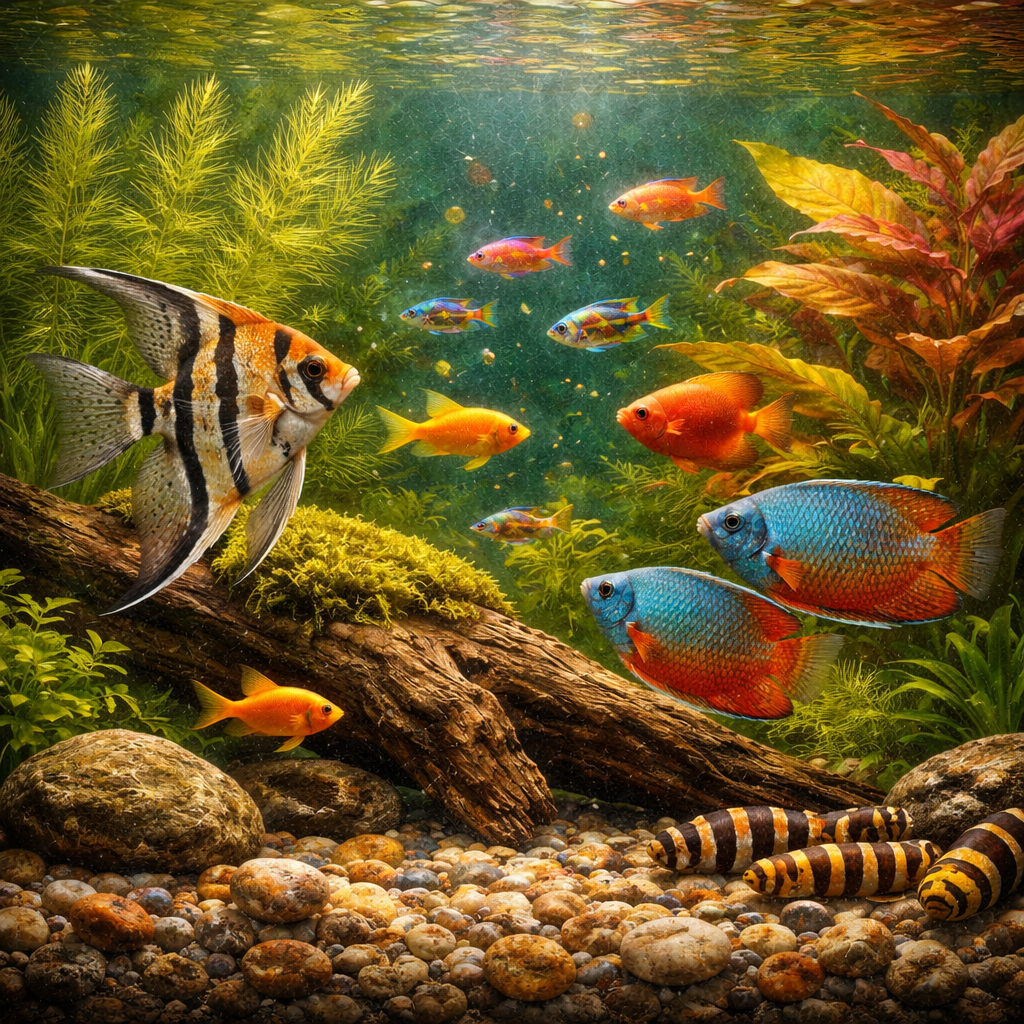
Seven Freshwater Species — A Field Guide
The freshwater aquarium hobby spans fish that live 2 years and fish that live 20 — from tiny shoaling tetras to large cichlids that develop individual personalities. Understanding your species determines everything: tank size, companions, diet, and what to expect over the years ahead.
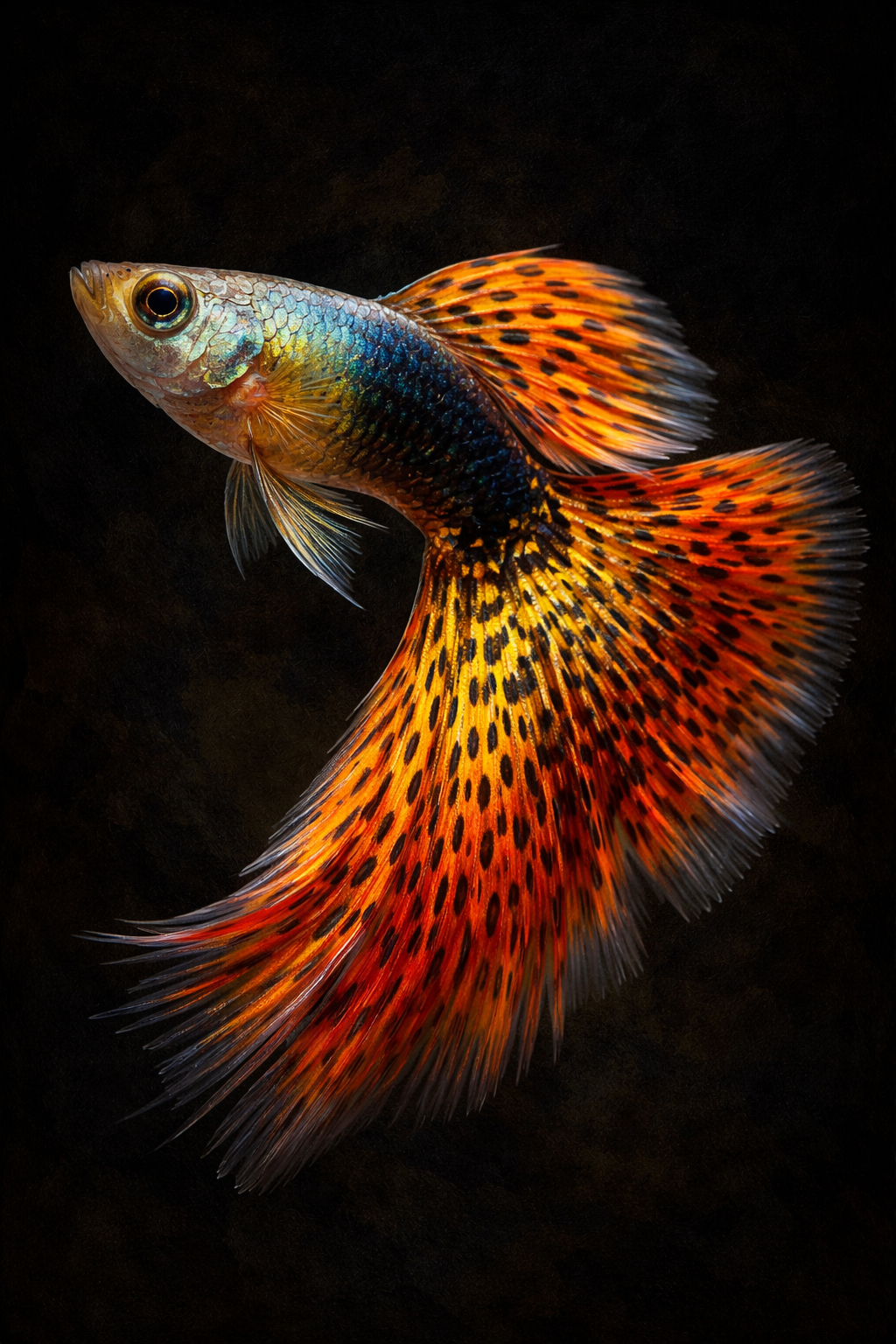
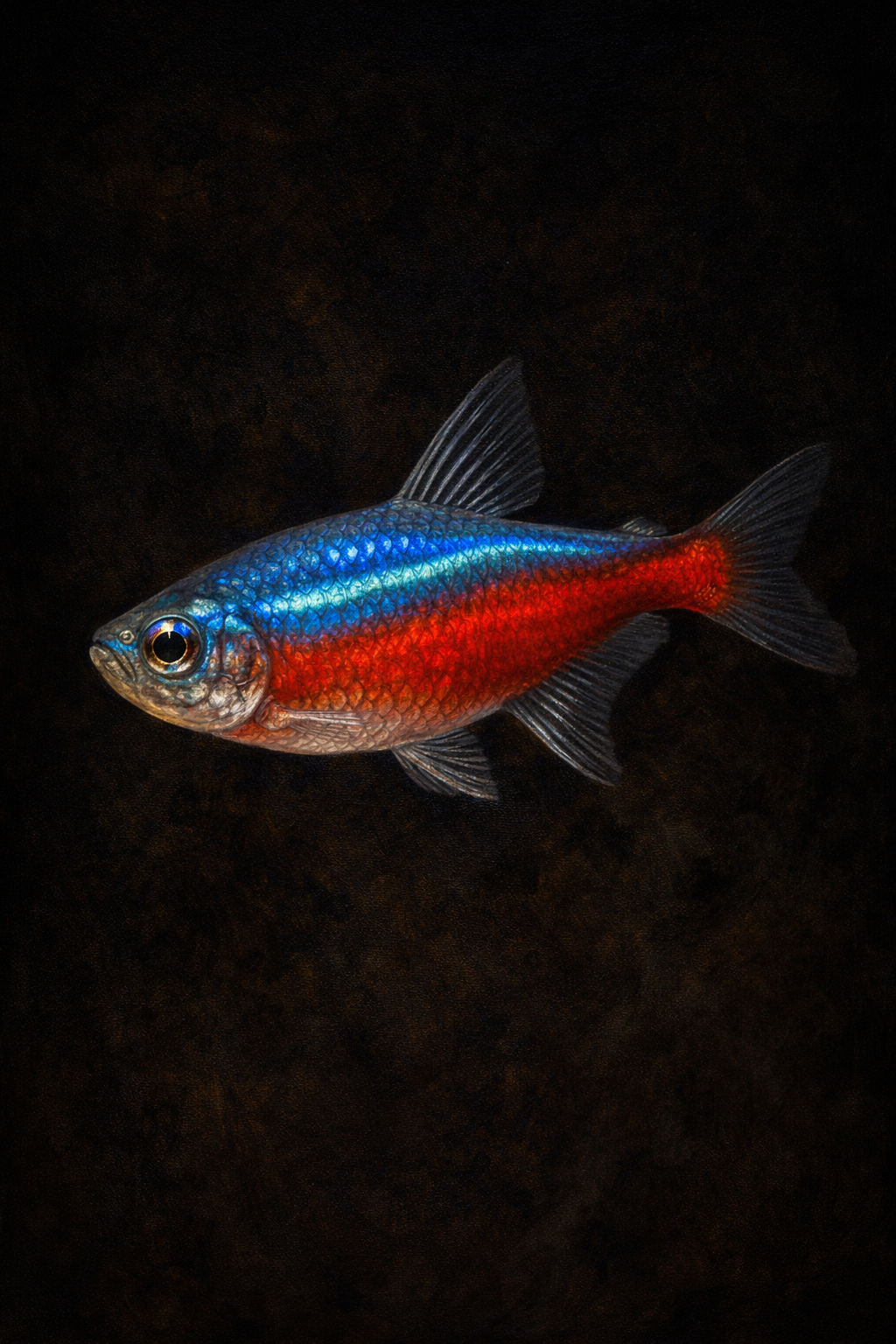
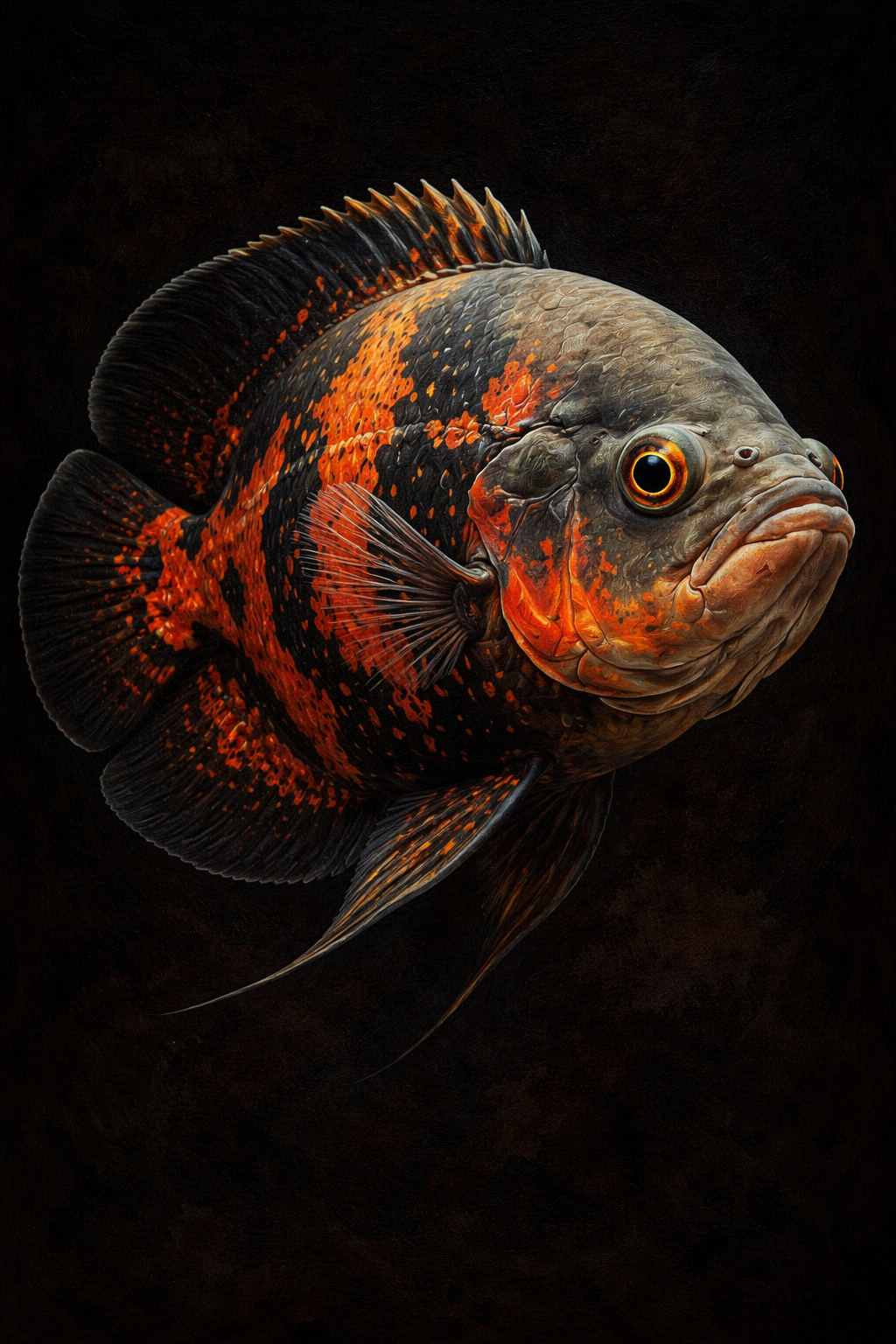
Freshwater Fish Age to Human Years
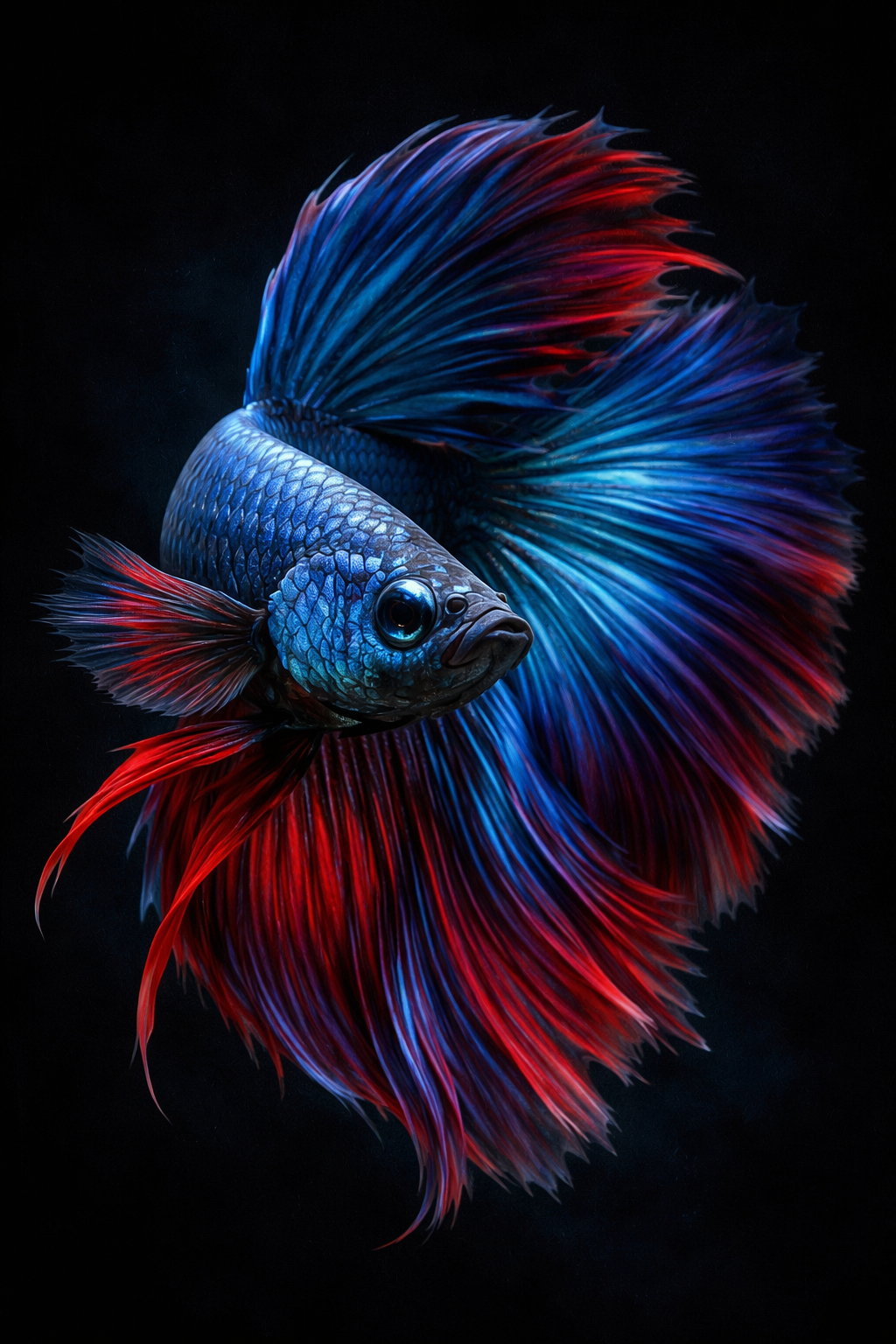
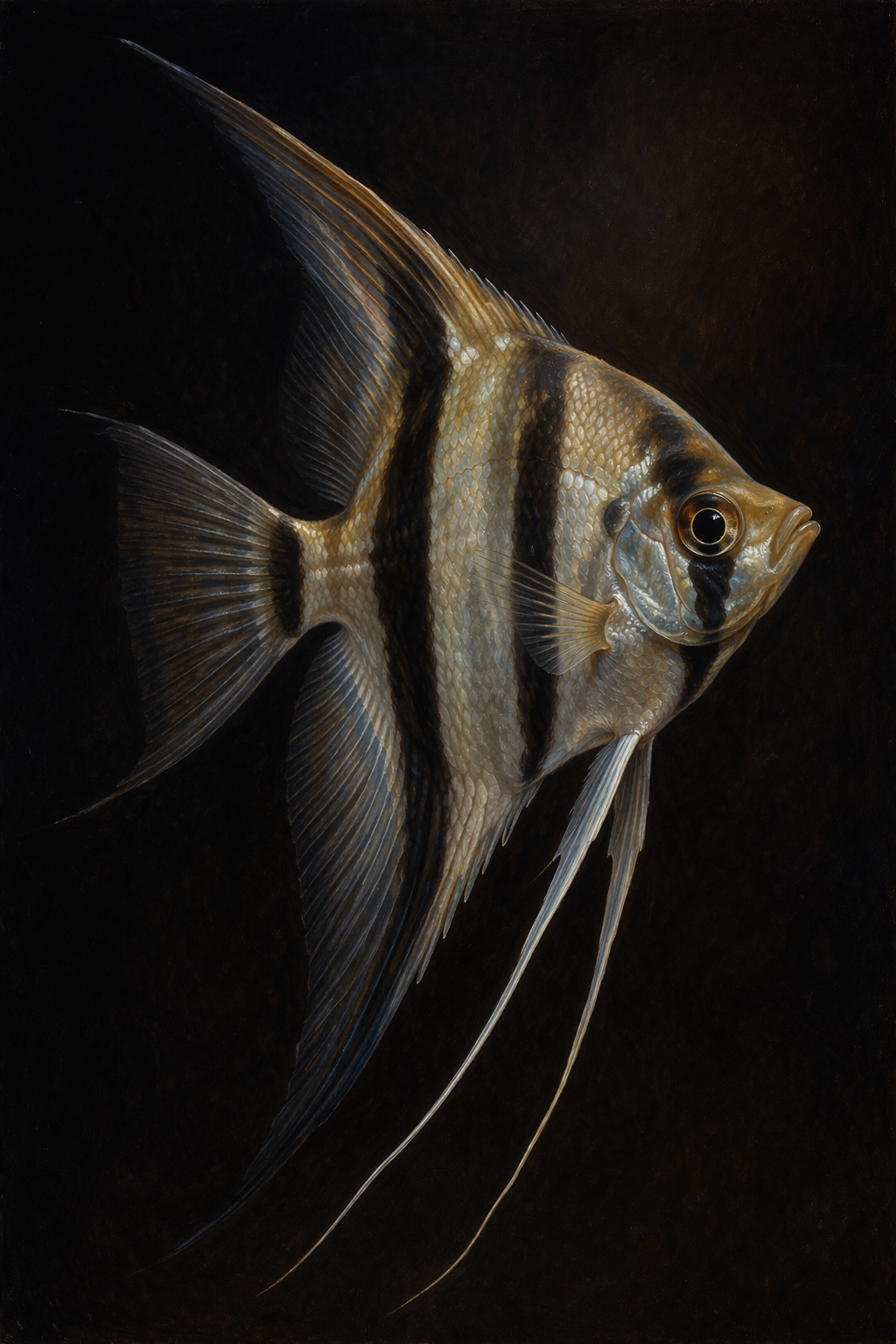
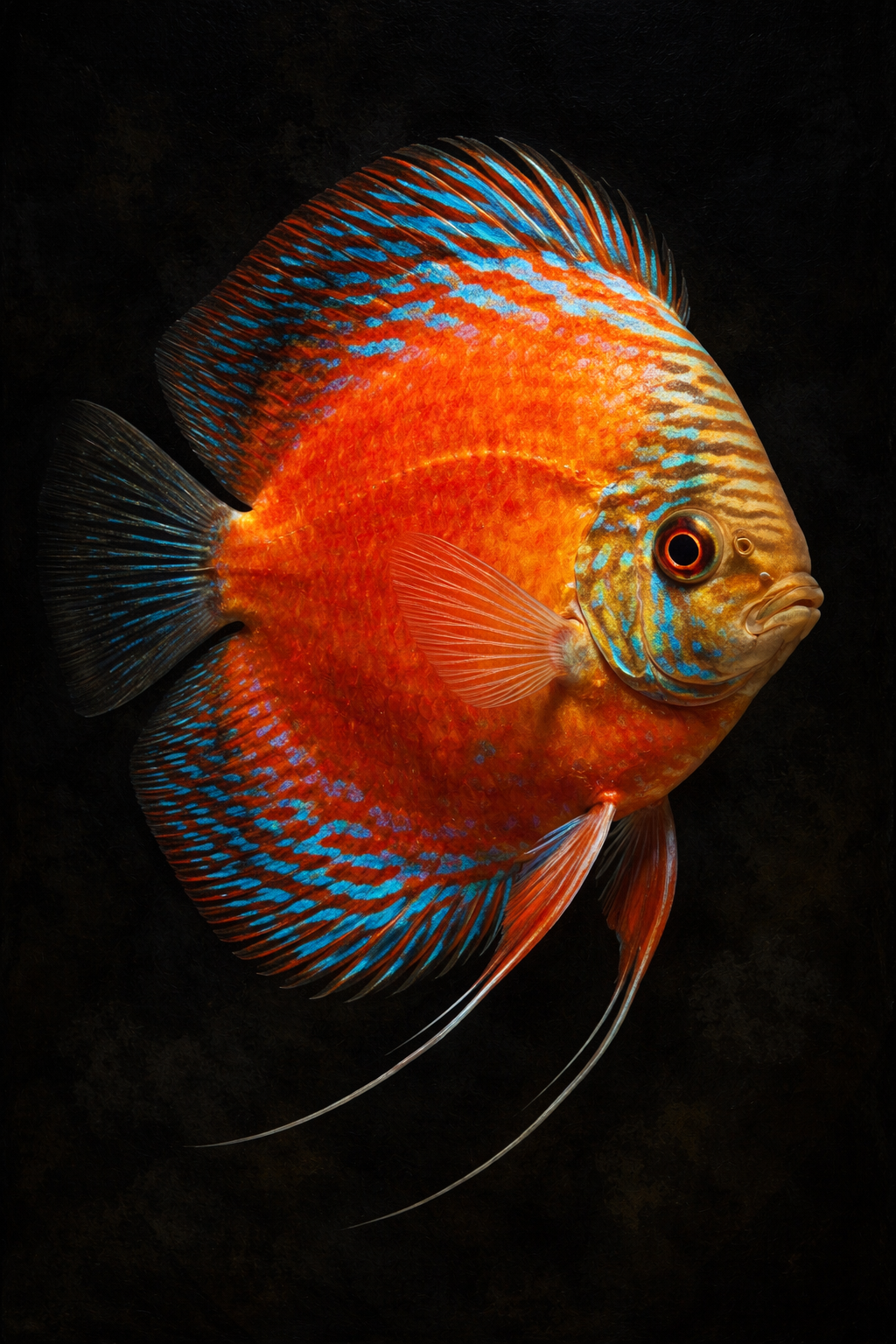
| Fish Age | Betta | Oscar / Discus | Angelfish | Guppy | Neon Tetra | Life Stage |
|---|---|---|---|---|---|---|
| 3 months | ~10 yrs | ~5 yrs | ~6 yrs | ~15 yrs | ~9 yrs | Juvenile — near or at sexual maturity |
| 1 year | ~26 yrs | ~12 yrs | ~13 yrs | ~38 yrs | ~20 yrs | Young Adult |
| 2 years | ~48 yrs | ~22 yrs | ~24 yrs | ~65 yrs | ~36 yrs | Prime Adult / Middle Age |
| 4 years | ~76 yrs | ~40 yrs | ~46 yrs | Elder | ~60 yrs | Senior (betta) / Prime (others) |
| 7 years | Elder | ~62 yrs | ~70 yrs | — | ~82 yrs | Senior |
| 10 years | — | ~76 yrs | ~84 yrs | — | Elder | Elder (most species) |
| 15+ years | — | Elder | — | — | — | Exceptional longevity |
🐟 Fish age is typically estimated from scale rings (annuli) — similar to tree rings — or from otoliths (ear bones) that also form growth rings. In captive fish, age is known from purchase records and keeper notes. The lifespan variation between species is enormous: a guppy at 2 years is in its senior years while an oscar at 2 years is still a juvenile. Always research your specific species before purchase — a "starter fish" that lives 20 years is a 20-year commitment.
Freshwater Fish — The Latest Science
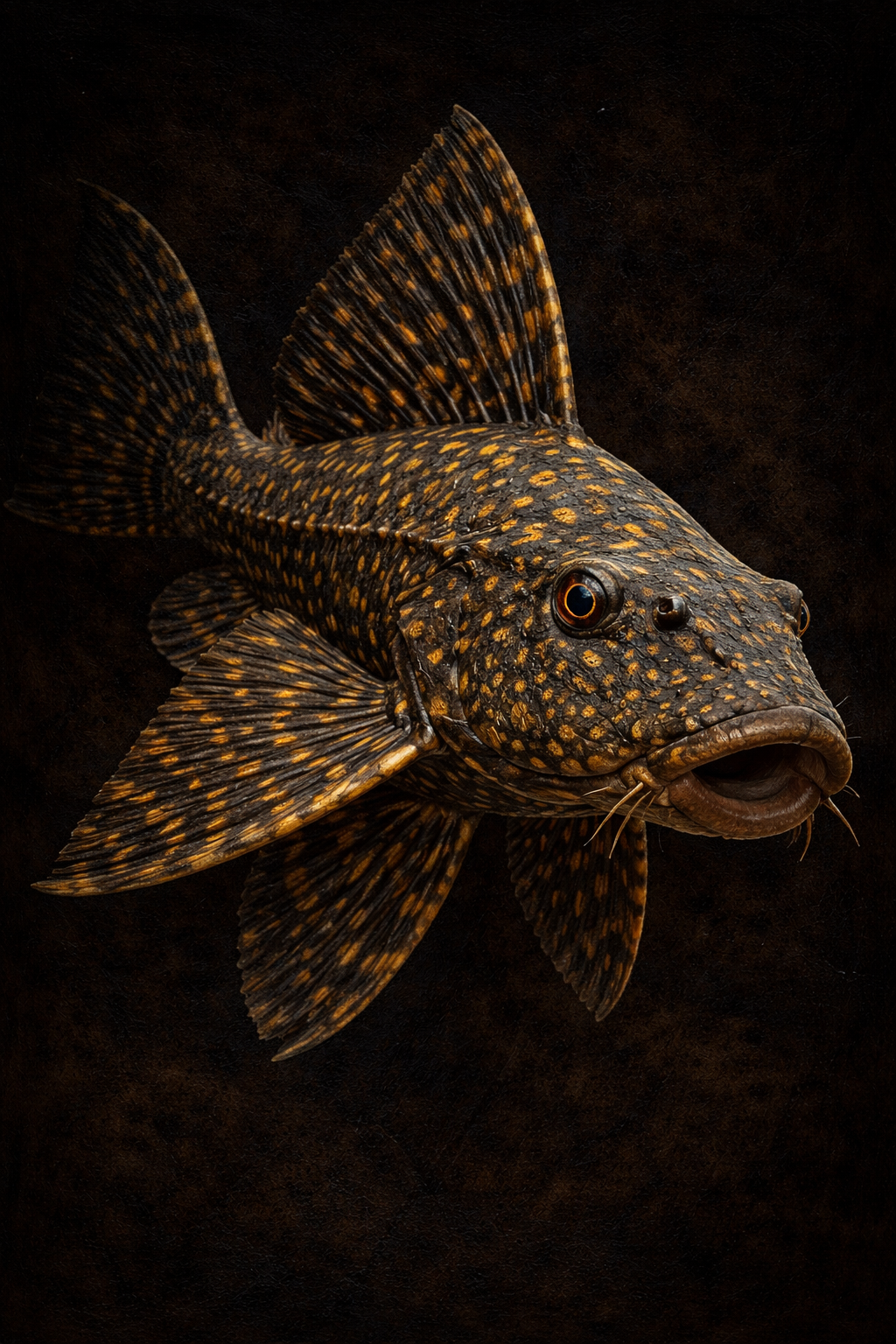
Conservation group SHOAL's annual New Species Report revealed that 260 new species of freshwater fish were formally described by scientists in 2024 — drawn from 140 genera including many already popular in the aquarium trade. The list included new species of Corydoras, Danio, Neon-tetra relatives (Hyphessobrycon), pleco relatives (Hypostomus and Panaqolus), and cichlids (Telmatochromis, Pseudotropheus), among dozens of others. Many came from the Amazon basin, Southeast Asia, and Central African river systems.
Then in March 2026, Circle of Blue reported that 309 new freshwater fish species were identified in 2025 — the highest annual total since 2017 and the third-highest since scientists began keeping records in 1758. More than half were discovered in Asia (165 species), followed by South America (91), Africa (30), North America (20), and Europe (3). One of the newly discovered species — a killifish found in Kenya — was immediately assessed as critically endangered upon discovery, a reminder that describing a species and losing it can happen on nearly the same timeline.
The discoveries underscore both the extraordinary richness of freshwater biodiversity and its fragility. Freshwater habitats cover less than 1% of Earth's surface but support approximately 15,000 known fish species — more than all marine and terrestrial vertebrates combined. And those habitats are under severe pressure from dams, pollution, agricultural runoff, and climate change.
A 2024 IUCN report found that the population abundance of 284 migratory freshwater fish species declined by 81% between 1970 and 2020 — one of the steepest documented collapses of any vertebrate group. More than 65% of assessed species showed population declines. The drivers are multiple and interacting: dam construction blocking migration routes, water extraction for agriculture and industry, pollution from agricultural runoff and urban wastewater, overfishing, and invasive species competition.
Climate change is now compounding all of these pressures simultaneously. A 2024 study in PNAS found that freshwater fish populations tend to grow in cooler regions where warming creates temporarily more suitable conditions, while declining in warmer areas where heat, low dissolved oxygen, and altered flood timing push species beyond their thermal tolerance. The net result across most of the tropics — where the majority of freshwater fish species live — is accelerating decline.
The aquarium hobby has a complex relationship with this crisis. The global ornamental fish trade — valued at approximately $7.8 billion in 2025 — includes both wild-caught fish (which can pressure wild populations) and captive-bred fish (which can reduce pressure on wild stocks and serve as conservation breeding insurance). Species like the neon tetra and betta are now almost entirely captive-bred; others, particularly rare wild-caught species sold for high prices, remain under collection pressure.
The popular image of fish as simple, memory-less automatons has been comprehensively dismantled by research over the past decade. Studies have now confirmed that fish demonstrate: long-term memory (up to months in laboratory conditions, contradicting the "3-second memory" myth); individual recognition of conspecifics and humans; social learning (learning from observing other fish); tool use (wrasse species using rocks to crack open shells); deceptive behaviour in competitive feeding contexts; and, in cleaner wrasse, apparent responses to mirror tests that have sparked genuine debate about fish self-awareness.
For aquarium keepers, these findings have practical implications. Oscars and other large cichlids that "beg" at the glass are not simply conditioned feeding responses — they are demonstrating individual recognition of their keepers and associating them with positive experiences. Bettas that flare at their reflection or follow a keeper's finger are engaging with their environment cognitively. Providing environmental enrichment — varied hiding spaces, foraging opportunities, objects to investigate — produces measurably less stressed and more active fish than bare tanks, just as it does in other animals.
The global ornamental fish and aquarium market reached approximately $7.8 billion in 2025 and is projected to nearly double to $14 billion by 2033, driven by several converging trends. The COVID-19 pandemic created a surge in home aquarium interest that has been sustained by a growing aquascaping movement — the art of creating naturalistic planted underwater landscapes — which has developed a substantial social media following and competitive scene.
Smart aquarium technology is transforming the hobby: AI-powered water quality monitoring, automated dosing systems, LED lighting with programmable sunrise and sunset cycles, and app-connected filtration are making it significantly easier to maintain stable water chemistry — historically the primary reason for beginner failures. The result is that fish species previously considered expert-only (including discus) are now being successfully kept by intermediate hobbyists with access to quality monitoring equipment.
The freshwater segment continues to dominate the market — tropical freshwater fish account for the largest share of ornamental fish sales globally, led by bettas, guppies, tetras, and cichlids. The combination of vibrant colours, relative ease of care, and the extraordinary diversity available has made the freshwater planted tank one of the most accessible and visually rewarding forms of home aquarium-keeping.
Things About Freshwater Fish That Will Actually Surprise You
🐟 There are approximately 15,000 known freshwater fish species — more species than all mammals, birds, reptiles, and amphibians combined. They live in less than 1% of Earth's water surface. 309 new species were described in 2025 alone. The freshwater fish you keep in your aquarium represent the visible tip of an extraordinary underwater world that scientists are still actively mapping — and that is disappearing faster than it can be documented.