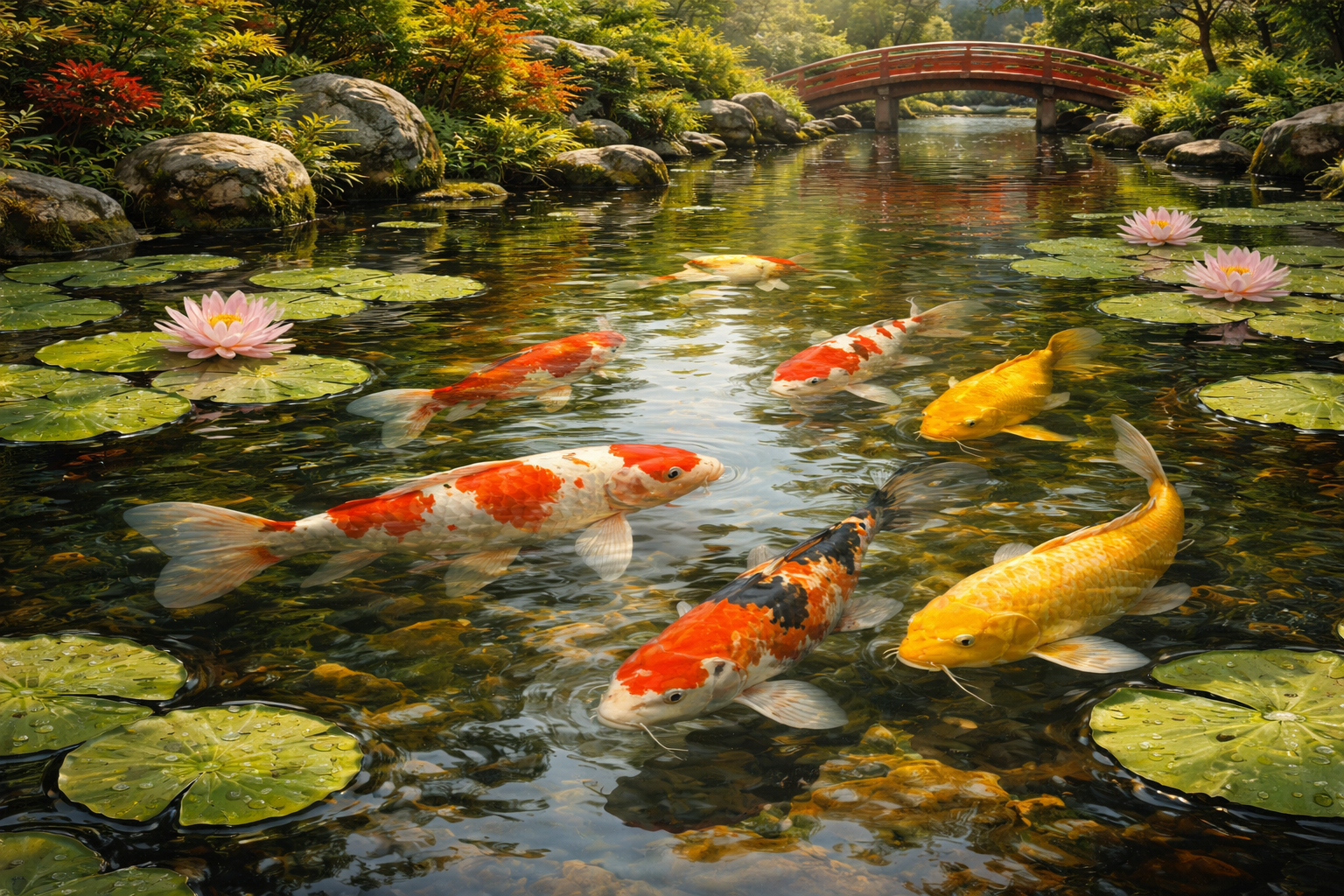
Things About Kois That Will Actually Surprise You
Kois — The Latest Science and Research
Water quality is the single most important factor in koi longevity — and the factor most commonly neglected by new keepers. Koi require clean, oxygen-rich water with stable pH (7.0-8.5), low ammonia and nitrite levels, and adequate dissolved oxygen. A properly sized filtration system, regular water testing, and seasonal management (including aeration in winter when ice can prevent gas exchange) are non-negotiable for koi living beyond 10-15 years.
Pond size matters enormously: overcrowding causes chronic stress, increases disease risk, and stunts growth. Most experts recommend a minimum of 1,000 gallons for a small koi pond with 2-3 fish, with significantly more for larger collections. Predator protection — from herons, raccoons, and domestic cats — is another critical factor: a heron can devastate a koi pond in minutes. The difference between a koi that lives 15 years and one that lives 40+ years is almost entirely about the quality and consistency of care.
The Smithsonian's National Zoo notes that koi have an average lifespan of 40 years with the oldest known individual living to nearly 230 years — placing them alongside tortoises, bowhead whales, and quahog clams in the category of extreme vertebrate longevity. Unlike most of those species, koi can be kept in backyard ponds accessible to ordinary households. This creates an unusual situation: a commonly kept pet animal with a potential lifespan that could outlast the owner, their children, and potentially their grandchildren.
Koi are carp — members of the family Cyprinidae — and their extraordinary longevity is thought to relate to their slow metabolism, cold-water adaptation, and efficient cellular repair mechanisms. Research into koi longevity is ongoing; their accessibility as research subjects makes them valuable models for studying vertebrate aging in ways that are more difficult to study in wild long-lived species.