Popular Pets
🐶 Dog 🐱 Cat 🐰 Rabbit 🐹 Hamster 🐾 Guinea Pig 🦜 Parrot 🦡 Ferret 🐀 Rat 🐭 Chinchilla 🦔 Hedgehog 🐟 Goldfish 🦜 Macaw
Farm & Large Animals
🐴 Horse 🐄 Cow 🐄 Highland Cow 🐷 Pig 🐑 Sheep 🐐 Goat 🐴 Donkey 🦙 Alpaca 🐐 Mountain Goat 🐔 Chicken 🦆 Duck 🦃 Turkey
Wild Animals
🐘 Elephant 🦁 Lion 🐯 Tiger 🐆 Leopard 🐺 Wolf 🐻 Bear 🐻‍❄️ Polar Bear 🦍 Gorilla 🐒 Chimpanzee 🦧 Orangutan 🦘 Kangaroo 🐾 Capybara 🦒 Giraffe 🦊 Fox 🦅 Raptor 🦉 Owl 🐧 Penguin 🦩 Flamingo 🐾 Hyena 🐾 Meerkat 🦥 Sloth 🦡 Badger 🐾 Wolverine 🐾 Armadillo
Ocean & Aquarium
🦈 Shark 🐋 Orca 🐬 Dolphin 🐋 Whale 🐋 Blue Whale 🐳 Beluga Whale 🦄 Narwhal 🐋 Bowhead Whale 🐾 Manatee 🐟 Manta Ray 🐟 Freshwater Fish 🐠 Saltwater Fish 🐴 Seahorse 🐟 Koi
Exotic & Weird
🐍 Snake 🐍 Ball Python 🦎 Bearded Dragon 🦎 Iguana 🦎 Komodo Dragon 🦎 Chameleon 🦎 Leopard Gecko 🐢 Tortoise 🐢 Snapping Turtle 🐢 Sea Turtle 🐊 Crocodilian 🕷️ Tarantula 🦎 Axolotl 🐙 Octopus 🌊 Jellyfish 🦞 Lobster 🐚 Quahog 🔬 Tardigrade
Info
About FAQ Contact
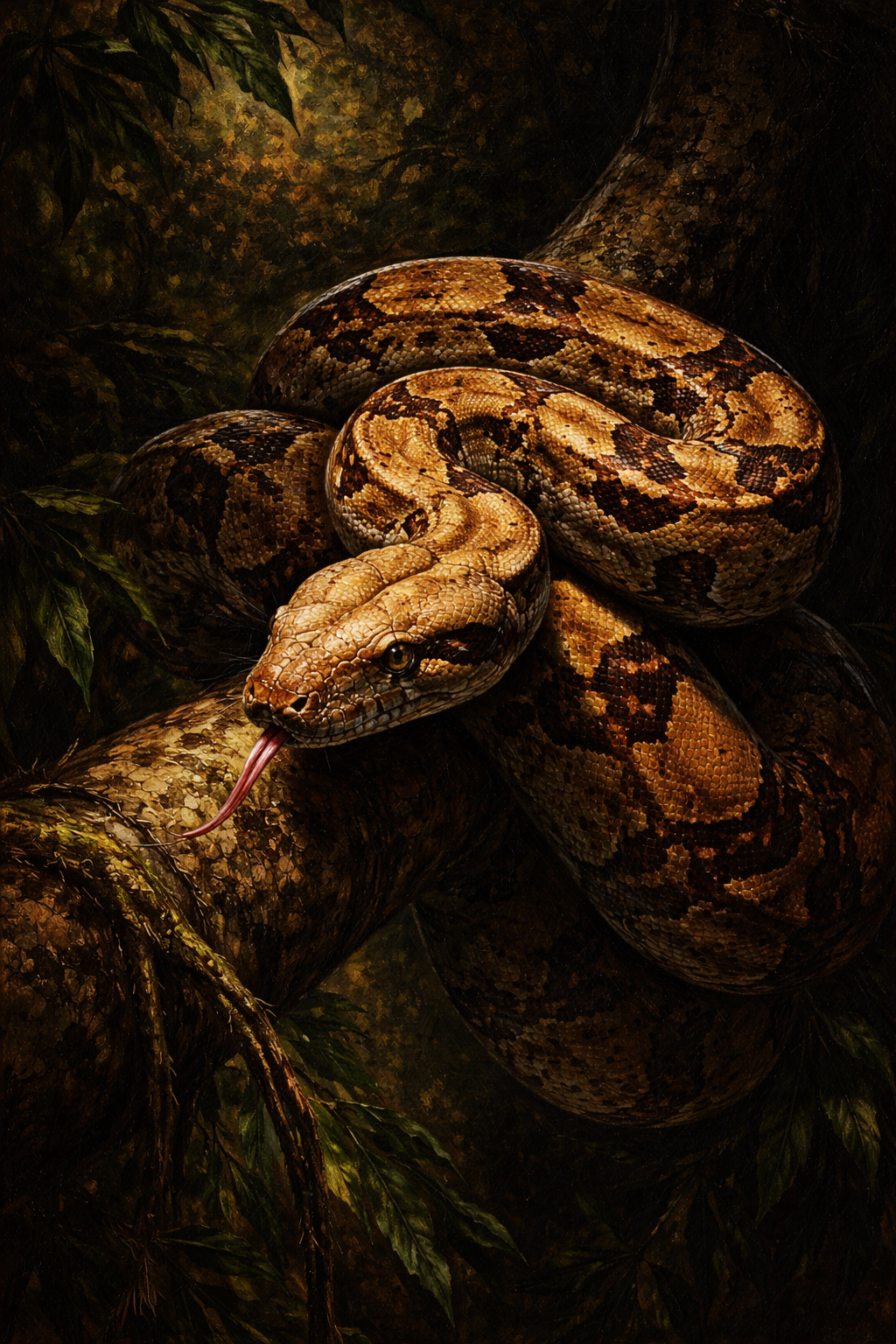
Photorealistic painting of a large boa constrictor coiled on a jungle branch with dramatic lighting and foliage
🐍 Exotic Pets

How Old Is Your Snake in Human Years?

📅 Updated March 2026🌿 7 species covered🐍 Lives: 15–40+ years

Ball pythons regularly live 30 years and have been recorded at 47. Reticulated pythons grow to 7 metres — the world's longest snake. A 2025 study proved that enriched housing literally increases brain volume in snakes. Snake ownership has grown 108% since 2018. And a new turquoise pit viper was just discovered in a Cambodian cave.

Calculate Snake Age →
🐍 Snake Age in Human Years
in human years
Snake age
Life stage
Species
🐍 What this age means

Seven Species — A Field Guide

Pet snakes span an extraordinary range — from the 30cm garter snake to the 7-metre reticulated python, from a 5-year lifespan to a documented 47 years. Choosing a species is choosing a relationship that could last longer than most human friendships. Research before you commit.
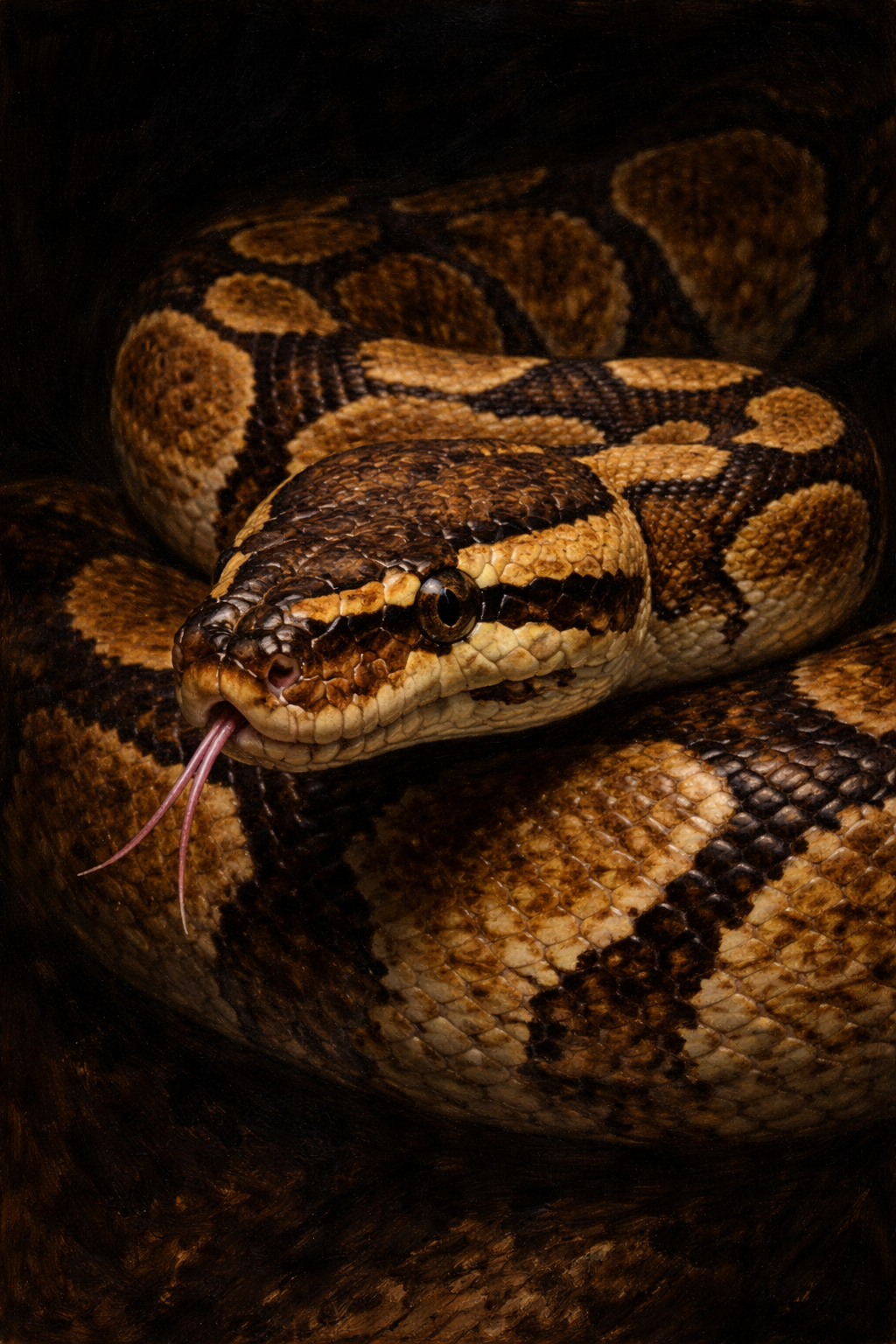
Ball Python portrait
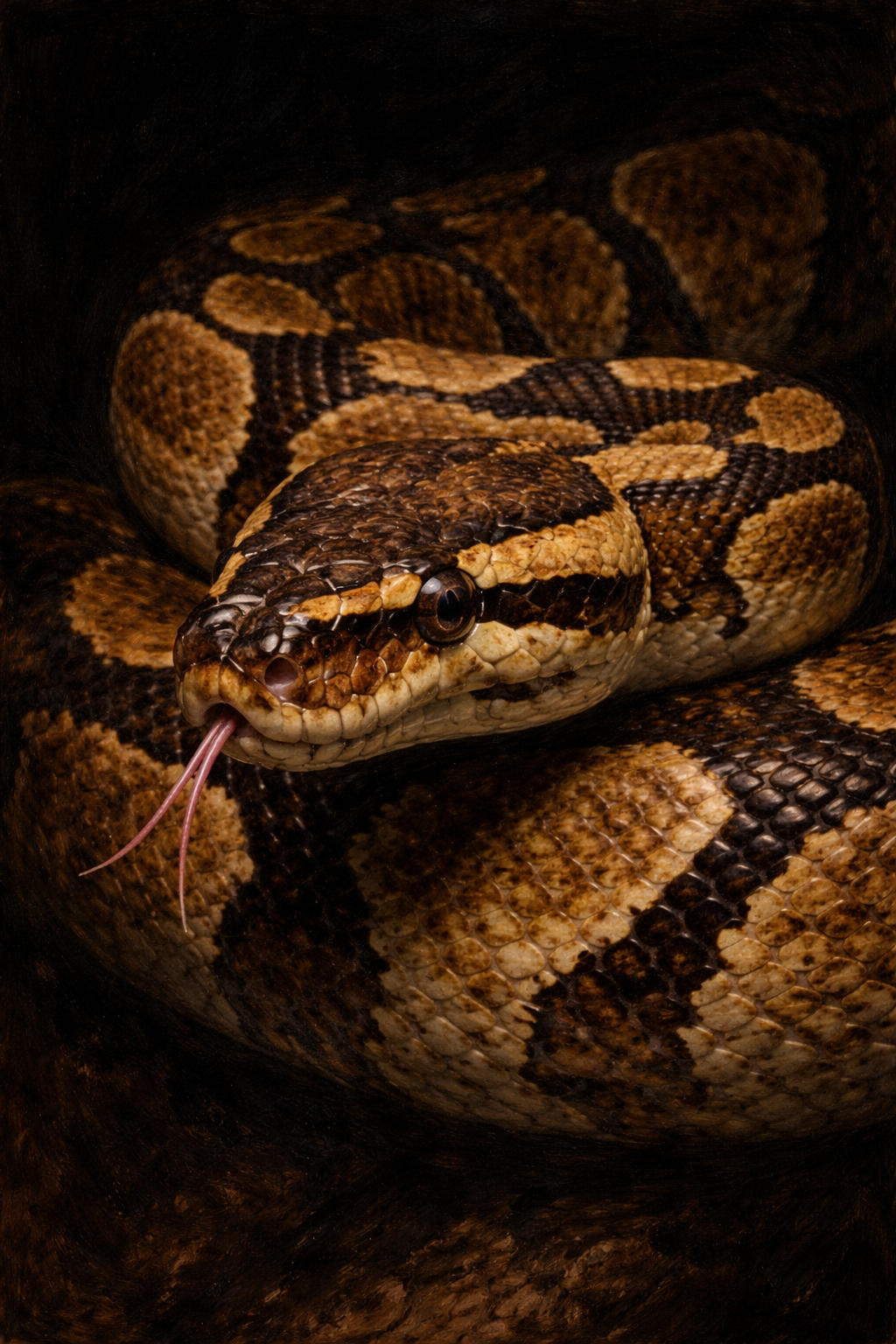
Ball Python
Python regius
Avg: 20–30 yrsMax: 47+ yrsSize: 1–1.5m
The most popular pet snake in the world — gentle, compact, and available in hundreds of selectively bred colour morphs. Native to West and Central Africa, ball pythons earn their name from their defensive behaviour of curling into a tight ball with their head protected at the centre. They are non-venomous constrictors that rarely bite when handled regularly from a young age. Their extraordinary lifespan — the record is 47 years and 6 months, held by a ball python at the Philadelphia Zoo — makes them a genuine long-term commitment. They are also one of the most extensively bred reptiles in the hobby, with morph breeding having produced patterns and colours ranging from pure white (leucistic) to deep black to iridescent blue-toned scaleless specimens. See the dedicated Ball Python page →
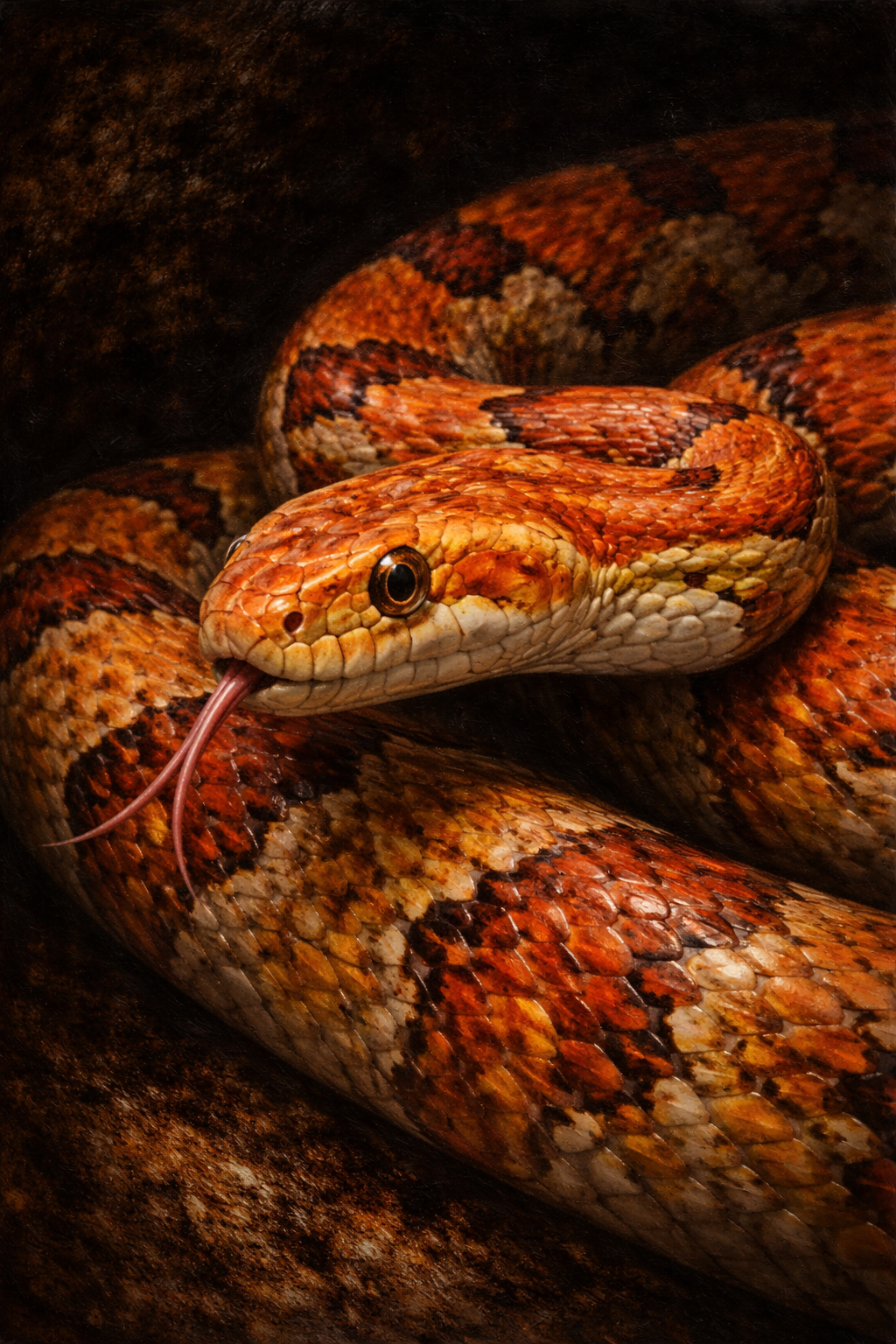
Corn Snake portrait
Corn Snake
Pantherophis guttatus
Avg: 15–20 yrsMax: ~32 yrsSize: 1–1.5m
Widely considered the ideal beginner snake — docile, hardy, easy to feed, and manageable in size. Native to the southeastern United States, corn snakes are named for the corn-cob pattern on their belly scales (not for living in cornfields, though they do frequent agricultural areas). They are active, inquisitive snakes that tolerate handling well and rarely bite. In the wild, corn snakes are important controllers of rodent populations — an ecological service that made them historically welcome around farms and granaries. Like ball pythons, they have been extensively bred in captivity, producing dozens of colour morphs including amelanistic (orange and white), anerythristic (black and grey), and albino forms.
King Snake portrait
King Snake
Lampropeltis spp.
Avg: 15–20 yrsMax: ~25 yrsSize: 1–2m
King snakes earn their regal name from their extraordinary ability to prey on and be immune to the venom of other snakes — including rattlesnakes, cottonmouths, and copperheads. This ophiophagous (snake-eating) behaviour is powered by a physiological resistance to pit viper venom that allows king snakes to overpower and consume venomous snakes that would kill most other predators. There are multiple species in the Lampropeltis genus, including the California kingsnake (L. californiae), the scarlet king snake (L. elapsoides, which mimics the coral snake's warning colouration), and the Eastern king snake (L. getula). In captivity, king snakes are active, feeding-responsive, and relatively hardy — though they can be nippy as juveniles.
Boa Constrictor portrait
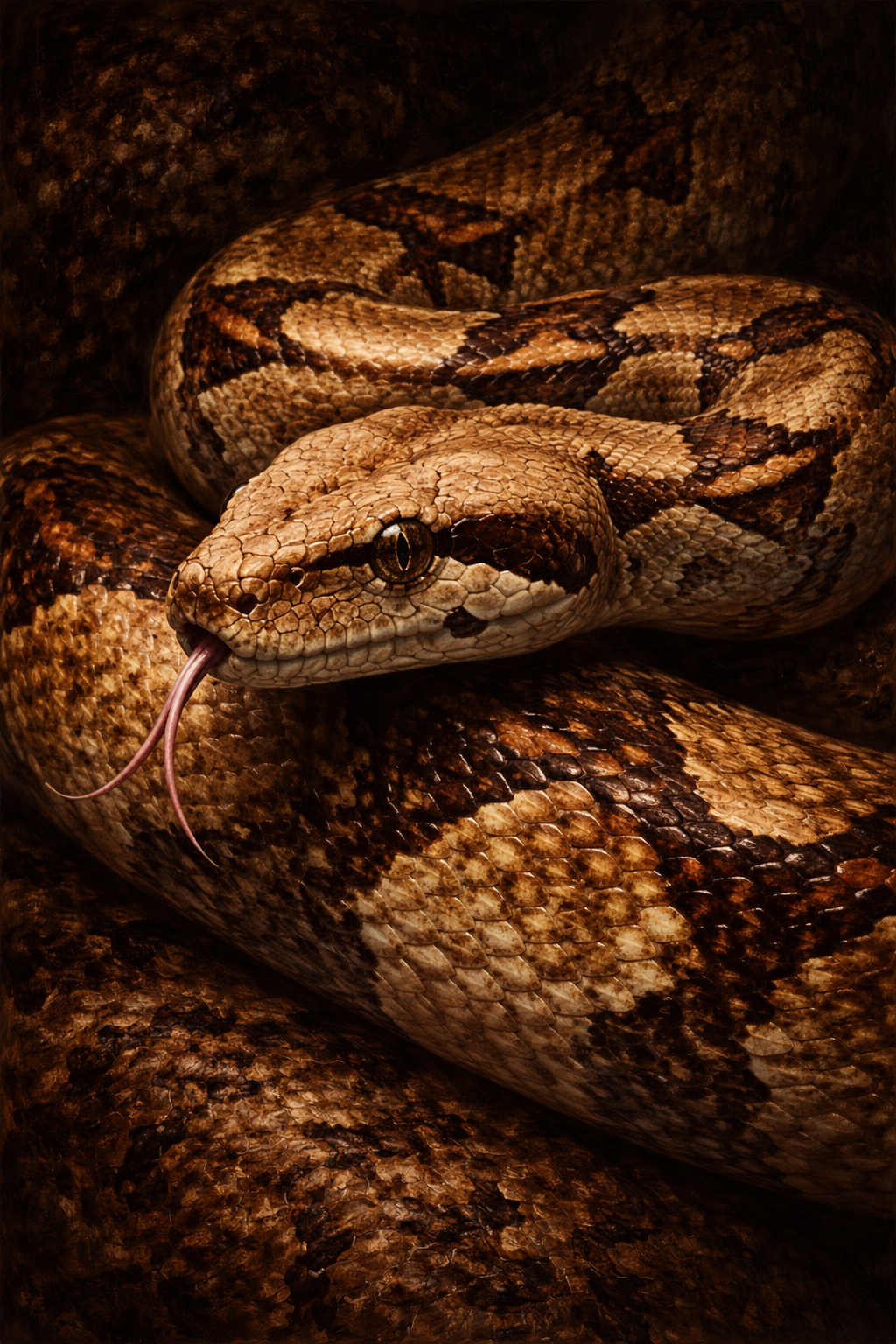
Boa Constrictor
Boa constrictor
Avg: 20–30 yrsMax: ~40 yrsSize: 2–4m
A large, powerful constrictor from Central and South America and the Caribbean — one of the longest-lived and most impressive snakes kept in captivity. Female boas are significantly larger than males; large females can reach 4 metres and weigh 20+kg. Boas are livebearers — females give birth to live young rather than laying eggs — with litter sizes of 10–60 neonates after a gestation period of approximately 5–8 months. They are generally calm when handled regularly but require experienced keepers given their size and strength. Their natural prey includes birds, lizards, and small to medium mammals, which they locate using heat-sensing pits along their lips and subdue by constriction.
Reticulated Python portrait
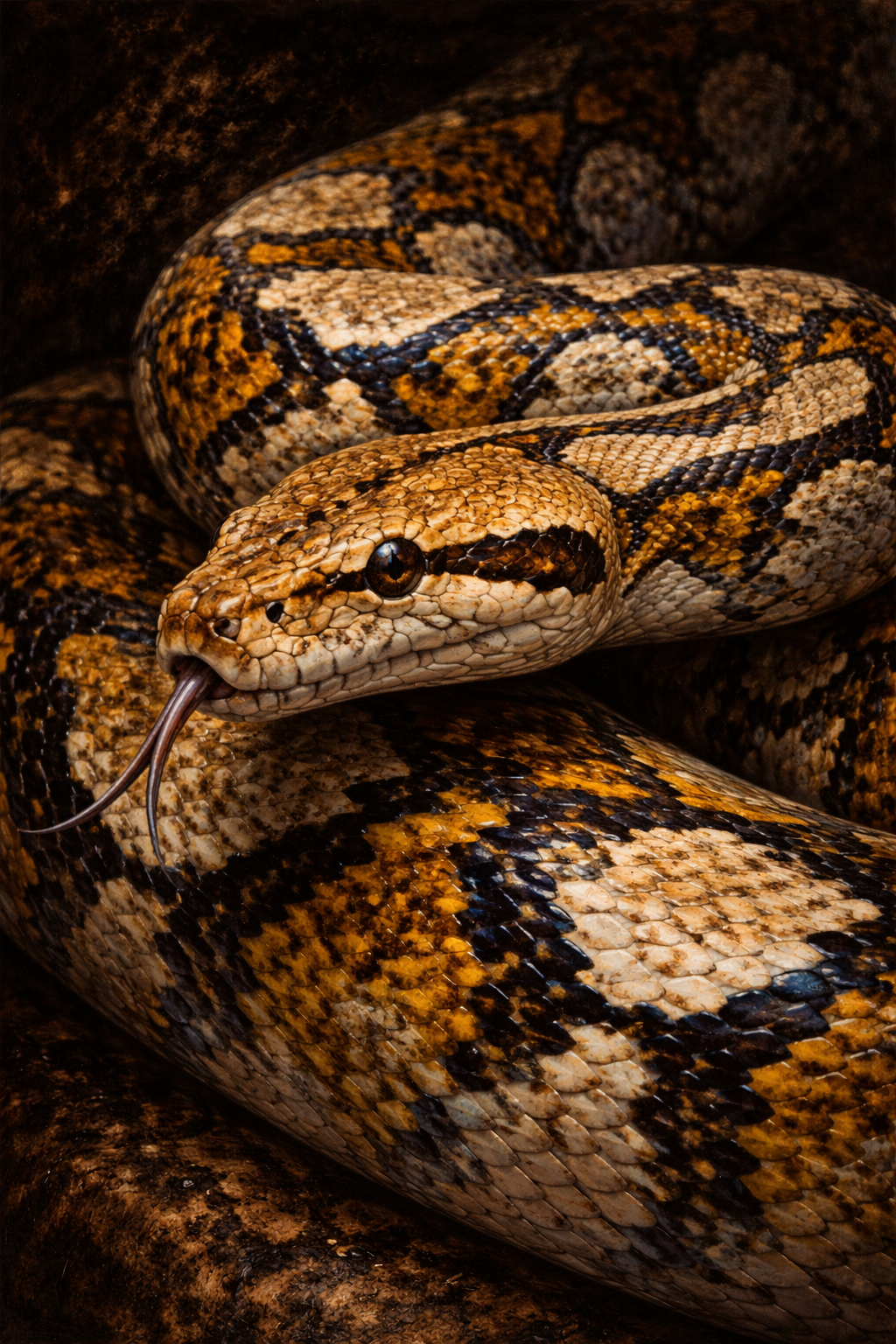
Reticulated Python
Malayopython reticulatus
Avg: 15–25 yrsMax: 30+ yrsSize: 4–7m+
The world's longest snake — verified specimens exceeding 7 metres have been documented, and unverified reports suggest individuals approaching 8 metres. Native to South and Southeast Asia, reticulated pythons are named for the complex geometric net-like pattern of their scales (reticulated = net-like). They are powerful constrictors with the strength to overpower large prey including deer and pigs in the wild. In captivity, captive-bred reticulated pythons can be surprisingly tractable with consistent handling from birth, and dwarf locality variants (from smaller island populations) reach more manageable 3–4 metre sizes. However, they remain large, powerful animals that require experienced, safety-conscious keepers. Their size makes solo handling of large adults inadvisable.
Hognose Snake portrait
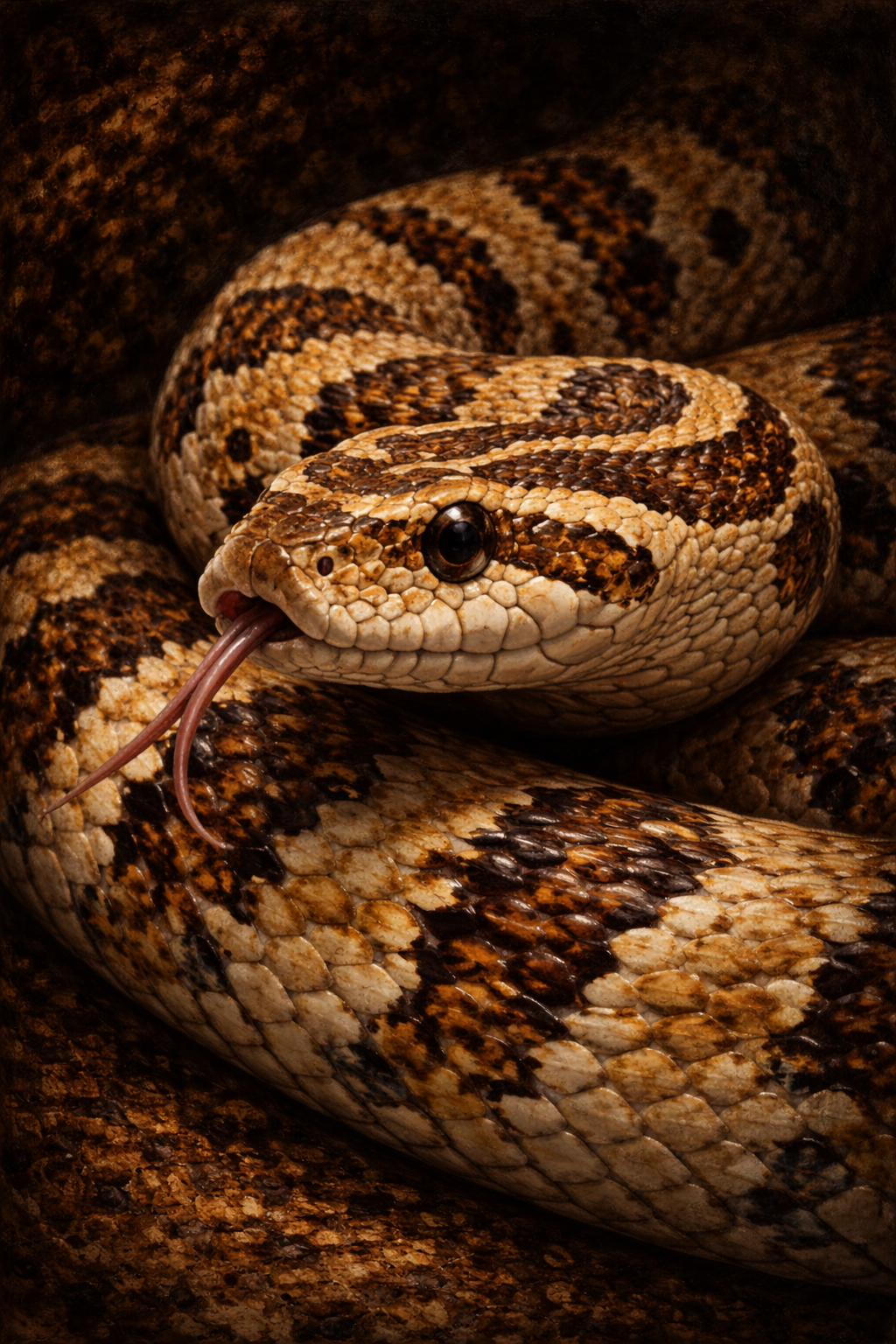
Western Hognose Snake
Heterodon nasicus
Avg: 10–15 yrsMax: ~18 yrsSize: 45–90cm
The comedian of the snake world — the hognose is famous for its dramatic defensive display when threatened: it flattens its neck, hisses loudly, strikes repeatedly with its mouth closed, then rolls onto its back, writhes, opens its mouth, lets its tongue hang out, and plays dead with convincing commitment. If you roll it right-side up, it promptly rolls back over, apparently unable to conceive that a dead snake would be right-side up. It is also the subject of a landmark 2025 study that found enriched housing significantly increased brain volume — with the hognose chosen specifically because it is one of the most popular pet snakes in the hobby and thus of direct practical relevance to keeper welfare decisions.
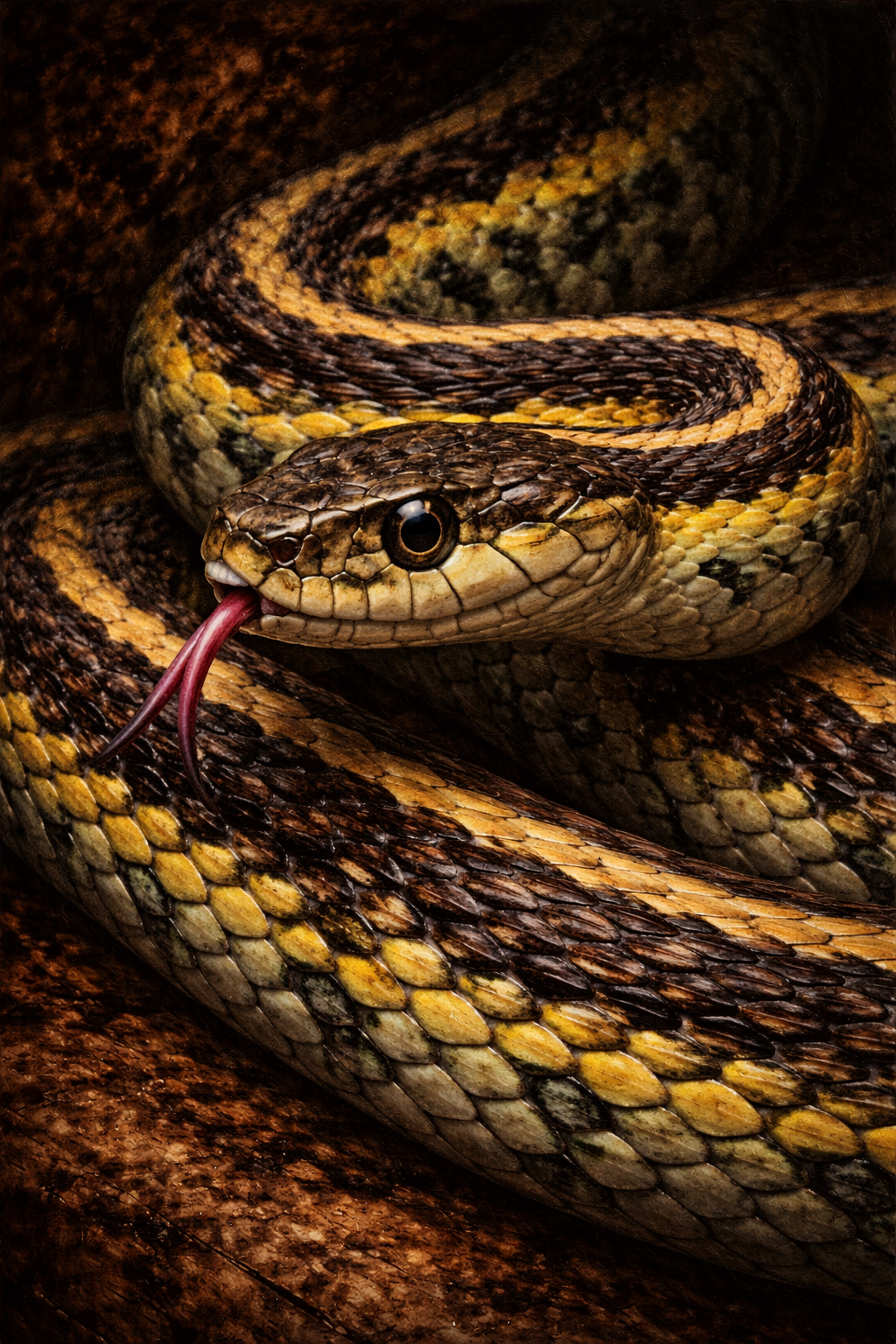
Garter Snake portrait
Garter Snake
Thamnophis spp.
Avg: ~10 yrs (captive)Max: ~14 yrsSize: 45–130cm
One of North America's most widespread and frequently encountered snakes — garter snakes are found across virtually the entire continent, from Canada to Central America, including at higher altitudes and latitudes than almost any other snake. They are viviparous (giving birth to live young), produce large litters of 10–40 neonates, and in colder climates aggregate in communal hibernacula of hundreds or even thousands of individuals. In Manitoba's Narcisse Snake Dens, tens of thousands of red-sided garter snakes emerge from hibernation in one of the most spectacular wildlife events in North America. As pets, garter snakes are small, active, and interesting to observe — but require live or frozen fish, earthworms, or amphibians, and can be musking and nippy when young.

Snake Age to Human Years

Snake AgeBall PythonCorn SnakeBoa ConstrictorHognoseGarter SnakeLife Stage
6 months~4 yrs~5 yrs~4 yrs~6 yrs~10 yrsHatchling / Neonate
1 year~7 yrs~9 yrs~7 yrs~10 yrs~17 yrsJuvenile
3 years~18 yrs~23 yrs~18 yrs~26 yrs~42 yrsYoung Adult
6 years~32 yrs~43 yrs~32 yrs~52 yrs~72 yrsPrime Adult
10 years~46 yrs~62 yrs~46 yrs~72 yrsElderMature Adult
15 years~60 yrs~76 yrs~60 yrsElderSenior
20 years~71 yrsElder~71 yrsSenior / Elder
30+ years~84 yrsElderElder / Record territory

🐍 Snake age is not always known precisely — captive-bred snakes have known hatch dates, but wild-caught individuals may be aged approximately from size, scale wear, and reproductive history. The record for the oldest snake in captivity is held by a ball python at the Philadelphia Zoo that lived to 47 years and 6 months. A snake that reaches this age has been cared for by someone who took their commitment seriously across nearly five decades.

Snakes — The Latest Science and Industry News

📰 March 2025 — Neuroscience
Enriched Housing Literally Grows Snake Brains — Landmark Study Uses Hognose Snakes

A study published in the Journal of Comparative Neurology in March 2025 provided striking evidence that environmental enrichment significantly increases brain volume in snakes — directly challenging the persistent misconception that reptiles are neurologically simple and tolerant of bare, minimalistic housing. Researchers at Brock University used the western hognose snake (Heterodon nasicus) — one of the most popular pet snakes in the hobby — as their model species, housing 15 juvenile hognose snakes in either enriched or standard bare environments for one year before imaging their brains.

The results were unambiguous: hognose snakes raised in enriched environments showed significantly greater total brain volume, particularly in midbrain and hindbrain regions, compared to those raised in barren standard conditions. The researchers concluded that standard bare reptile housing conditions actively stunt brain growth — and that the more accurate framing is not that enrichment helps snakes develop better, but that impoverished housing stunts development below what it would otherwise be. The study adds to growing evidence that reptiles respond to environmental enrichment in the same fundamental ways as mammals and birds.

For pet snake keepers, the practical implications are clear: providing hides, climbing branches, varied substrate, and visual complexity is not merely aesthetic or optional — it has measurable neurological consequences. A snake in a bare enclosure with a single hide and a water bowl is not thriving; it is being neurologically deprived.

📰 2024 — APPA Research
Snake Ownership Up 108% Since 2018 — 27% of Snake Owners Now Have Three or More

The American Pet Products Association's 2024 Fish and Reptile Owner Insight Report revealed a striking surge in snake ownership that has transformed the hobby. The most notable finding: 27% of snake owners now have three or more snakes in their household — a 108% increase since 2018. The data reflects a significant shift from casual single-snake ownership toward dedicated multi-snake keeping, driven by the extraordinary diversity of colour morphs available from captive breeders and by the growth of online reptile communities that share knowledge, equipment advice, and breeding stock.

The global pet snake market was valued at approximately $1.86 billion in 2024 and is projected to reach $3 billion by 2035, growing at 4.4% annually. Ball pythons dominate the market by a substantial margin — projected to account for approximately $1.2 billion of the market by 2035 alone — driven by the extraordinary diversity of captive-bred morphs and their reputation as manageable, long-lived, and visually stunning companions. Corn snakes represent the second-largest segment at approximately $500 million.

📰 March 2026 — Discovery
New Turquoise Pit Viper and Flying Snake Found in Cambodian Caves — Reticulated Python Spotted

A biodiversity survey of 64 caves across Cambodia's Battambang province, published in March 2026 and led by UK conservation charity Fauna & Flora, uncovered a range of species new to science — including a turquoise pit viper, a flying snake, and several new gecko species. The survey, conducted between November 2023 and July 2025, treated each isolated limestone karst hill as an independent evolutionary laboratory — finding that the same experiment of evolution was running independently in each isolated cave system, producing distinct variations in species that had been separated for tens of thousands of years.

The expedition also documented a young reticulated python — the world's longest snake, capable of exceeding 7 metres. The turquoise pit viper, still being formally named, is already of conservation concern: researchers warn its striking appearance makes it an immediate target for the exotic pet trade, and formal naming is the first step toward legal protection. The discovery underscores that even in a world of satellite mapping and drone surveys, significant vertebrate species remain unknown to science, often in cave systems and isolated habitats that have received limited scientific attention.

📰 Ongoing — Snake Cognition
Snakes Are Smarter Than Their Reputation — What Their Sensory Biology Reveals

Snakes have long been dismissed as simple, instinct-driven animals with limited cognitive capacity — a view that research increasingly challenges. Studies have demonstrated that snakes have a significantly greater capacity for learning than early research indicated — showing measurable improvement in spatial learning tasks over repeated trials, use of multiple sensory channels to integrate environmental information, and age-dependent differences in how they gather and process information about their surroundings.

The sensory biology of snakes is itself remarkable. Pit vipers, pythons, and boas possess infrared-sensing pit organs — heat-sensitive membranes containing the TRPA1 channel, the most thermally sensitive receptor found in any vertebrate — allowing them to form thermal images of warm-blooded prey in complete darkness. Their forked tongue samples chemical gradients simultaneously from two slightly separated points, allowing them to triangulate the direction of scent trails with a precision that no nostril-based system can match. These are not the senses of a simple animal — they are the highly evolved, exquisitely sensitive tools of a predator that has spent 130 million years refining its approach to hunting without limbs.

Things About Snakes That Will Actually Surprise You

🎭 The Hognose Death Performance
When threatened, the western hognose snake performs one of the most elaborate defensive displays in the animal kingdom. It first flattens its neck into a cobra-like hood and hisses aggressively. If this fails, it strikes repeatedly — but with its mouth closed, delivering harmless thumps. If the threat persists, it rolls onto its back, opens its mouth, lets its tongue hang limply, and plays dead with extraordinary conviction — including releasing a foul-smelling musk. If you roll it right-side up, it immediately rolls back over — apparently unable to accept that a convincingly dead snake would be right-side up. This involuntary response undermines its own performance in a way that herpetologists and keepers find endlessly charming.
🌡️ Pit Vipers See Heat
Pythons, boas, and pit vipers possess pit organs — heat-sensing membranes in pits along their face — that detect infrared radiation with extraordinary precision. The TRPA1 channel in the pit membrane is the most thermally sensitive receptor found in any vertebrate. These organs allow pit vipers and pythons to form a thermal image of warm-blooded prey in complete darkness — detecting temperature differences as small as 0.003°C. The ball python has labial heat-sensing pits visible along its upper and lower lips; the boa constrictor has similar pits. In captivity, these organs are used to locate prey during feeding — a striking reminder that the snake perceives the world through entirely different sensory channels than its keeper.
🧠 Ball Pythons Live Nearly 50 Years
The record for the oldest snake in captivity is held by a ball python at the Philadelphia Zoo that lived to 47 years and 6 months before dying in 1992. The snake had been at the zoo since at least 1945. This extraordinary lifespan — equivalent to a human in their 80s by any reasonable conversion — makes ball pythons one of the longest-lived small-to-medium reptile species in captivity. A ball python purchased as a hatchling today could realistically still be alive in 2070. The combination of long lifespan, compact size, docile temperament, and extraordinary morph diversity has made the ball python the dominant pet snake globally — but that lifespan demands that purchasers think in decades, not years.
🐍 King Snakes Are Immune to Rattlesnake Venom
King snakes are ophiophagous — snake-eating — and have evolved a physiological immunity to pit viper venom that allows them to overpower and consume rattlesnakes, cottonmouths, and copperheads. The immunity operates via blood serum factors that neutralise the haemotoxic components of viper venom before they can cause damage. In an encounter between a king snake and a rattlesnake, the rattlesnake typically attempts to flee; cornered, it may press its coils against the ground and lift its body in a defensive arch, but the king snake pins it and begins swallowing headfirst. The presence of king snakes in an area is genuinely beneficial to humans — their predation on venomous snakes is a significant ecological service.
🌿 The World's Longest Snake
The reticulated python holds the verified record for the world's longest snake. The longest reliably measured specimen reached 7.67 metres (25 feet 2 inches). Unverified reports of 9-metre individuals exist but have never been confirmed by scientific measurement. Reticulated pythons are also among the heaviest snakes — large females can weigh 90+ kg. Their extraordinary size is powered by an ability to consume prey items proportionally enormous relative to their body — they can swallow deer, pigs, and in very rare documented cases, humans. Their iridescent scale pattern under direct light is one of the most visually spectacular sights in herpetology — each scale edged in iridescent blue-green that transforms the snake into something resembling hammered bronze in the right light.
🧬 Ball Python Morphs — 6,000+ Combinations
The ball python morph market is one of the most extraordinary examples of selective breeding in any animal species. Starting from the first captive-bred albino ball python documented in 1992, breeders have identified and bred over 4,000 individual genetic variants (morphs), which can be combined into an estimated 6,000+ unique combinations. These range from the pure white leucistic (no pattern, pure white with blue eyes) to the deep midnight black super melanistic, to iridescent scaleless morphs, to fire ball, to pied (white with coloured patches), to spider (reduced pattern with wobble), to banana (pastel yellow with brown freckles). The morph market drives a significant portion of the global ball python trade, with rare combinations selling for thousands of dollars at reptile expos worldwide.

🐍 All 7 species on this page are non-venomous constrictors or harmless colubrids. None pose a venom risk. Large boas and reticulated pythons carry a constriction risk if mishandled but are not venomous. The hognose snake produces a very mild rear-fanged venom used to subdue amphibian prey — it is not medically significant to humans and most people experience no reaction from a hognose bite. Always handle large pythons (2m+) with a second person present.

Key Care Requirements by Species

SpeciesEnclosure (adult)TemperatureDietHandling difficulty
Ball Python120x60cm minimum28–32°C warm / 24–26°C coolFrozen/thawed mice or rats, every 1–2 weeksEasy — very docile
Corn Snake120x60cm minimum26–30°C warm / 20–24°C coolFrozen/thawed mice, every 7–10 daysEasy — ideal beginner
King Snake120x60cm minimum28–32°C warm / 22–26°C coolFrozen/thawed mice, every 7–10 daysEasy — can be nippy as juvenile
Boa Constrictor180x90cm+ for adult female28–32°C warm / 24–27°C coolRats, rabbits for large adults; every 10–14 daysIntermediate — size requires care
Reticulated Python240x120cm+ minimum; custom builds advised30–35°C warm / 24–28°C coolLarge rats, rabbits, chickens for adultsAdvanced — large adults need 2 handlers
Hognose Snake90x45cm sufficient28–32°C warm / 22–25°C coolFrozen/thawed mice; some prefer amphibiansEasy — drama without danger
Garter Snake90x45cm minimum; active so bigger is better26–28°C warm / 18–22°C coolEarthworms, fish, amphibians; no dry miceEasy once settled; musks when young

Other Reptiles on PawClocks

Frequently Asked Questions

Ball pythons typically live 20–30 years in captivity with good care. The verified record is 47 years and 6 months, held by a ball python at the Philadelphia Zoo. Wild ball pythons generally live shorter lives due to predation and environmental stress. Their extraordinary longevity is one reason they are such a significant commitment — a ball python purchased as a hatchling could reasonably still be alive 25–30 years later.
Most ball python morphs are healthy, but some carry welfare concerns. The spider morph and related morphs (champagne, hidden gene woma, spotnose) are associated with a neurological condition called "wobble syndrome" — a head tremor and balance issue that varies in severity from mild to debilitating. Reputable breeders are transparent about this. The scaleless morph requires extra care as the lack of scales affects thermoregulation. Always research the specific morph genetics before purchasing and buy from breeders who are open about potential health issues.
A 2025 study found that snakes housed in enriched environments develop significantly greater brain volume than those in bare standard enclosures. Enriched housing for snakes means: multiple hides (one on the warm side, one on the cool side at minimum), varied substrate deep enough to burrow in, climbing opportunities (branches, cork bark), visual barriers, and objects to investigate and interact with. This is not luxury — the study framed it as standard bare housing stunting brain growth below its natural potential. For ball pythons specifically, deep substrate for burrowing is particularly important.
Reticulated pythons are the world's longest snake. Verified specimens have reached 7.67 metres; the typical large adult female reaches 5–7 metres and can weigh 90+ kg. Captive-bred specimens from dwarf island localities (Kalatoa, Kayuadi) reach more manageable 3–4 metres. Standard locality retics in captivity regularly reach 5–6 metres. Their size requires custom enclosures, large prey items, and a second handler for adults. They are not suitable for most home environments unless the keeper has significant space, experience, and infrastructure.
Yes — corn snakes are widely considered the best beginner snake. They are docile, rarely bite when handled regularly, eat frozen/thawed mice reliably, are a manageable 1–1.5 metres as adults, are hardy and forgiving of minor husbandry imperfections, and are available in dozens of colour morphs from captive breeders. They live 15–20 years, so they require a genuine commitment, but they are significantly less demanding in terms of size, strength, and care complexity than boas or pythons. A well-set-up corn snake can thrive in a 120x60cm enclosure with a warm end, cool end, hides, and frozen mice every 7–10 days.
Feeding refusal in snakes is common and usually not an emergency. Common causes include: being in shed (snakes almost always refuse food when shedding — blue eyes and dull scales are the tell); stress from recent handling, enclosure move, or environmental change; incorrect temperatures (a snake that can't properly thermoregulate won't feed); being in breeding season (males especially may refuse food for months); being an intact female cycling for eggs; or simply being a stubborn individual. Ball pythons are notorious for multi-month feeding strikes that resolve spontaneously. Unless the snake is losing significant weight, giving a thin appearance, or showing other signs of illness, a feeding refusal of several weeks in an otherwise healthy snake is usually not a cause for concern.
Research suggests snakes can distinguish familiar from unfamiliar scents and may recognise their keepers primarily through smell and heat signature rather than vision. Studies have shown snakes demonstrate measurable learning in spatial tasks and show reduced stress responses to familiar handlers over time. The 2025 brain enrichment study found that environmental complexity — including keeper interaction — has neurological effects on snake development. They are unlikely to recognise their owner in the way a dog or parrot would, but the popular view of snakes as completely indifferent to their keepers and incapable of any recognition is not supported by the science.