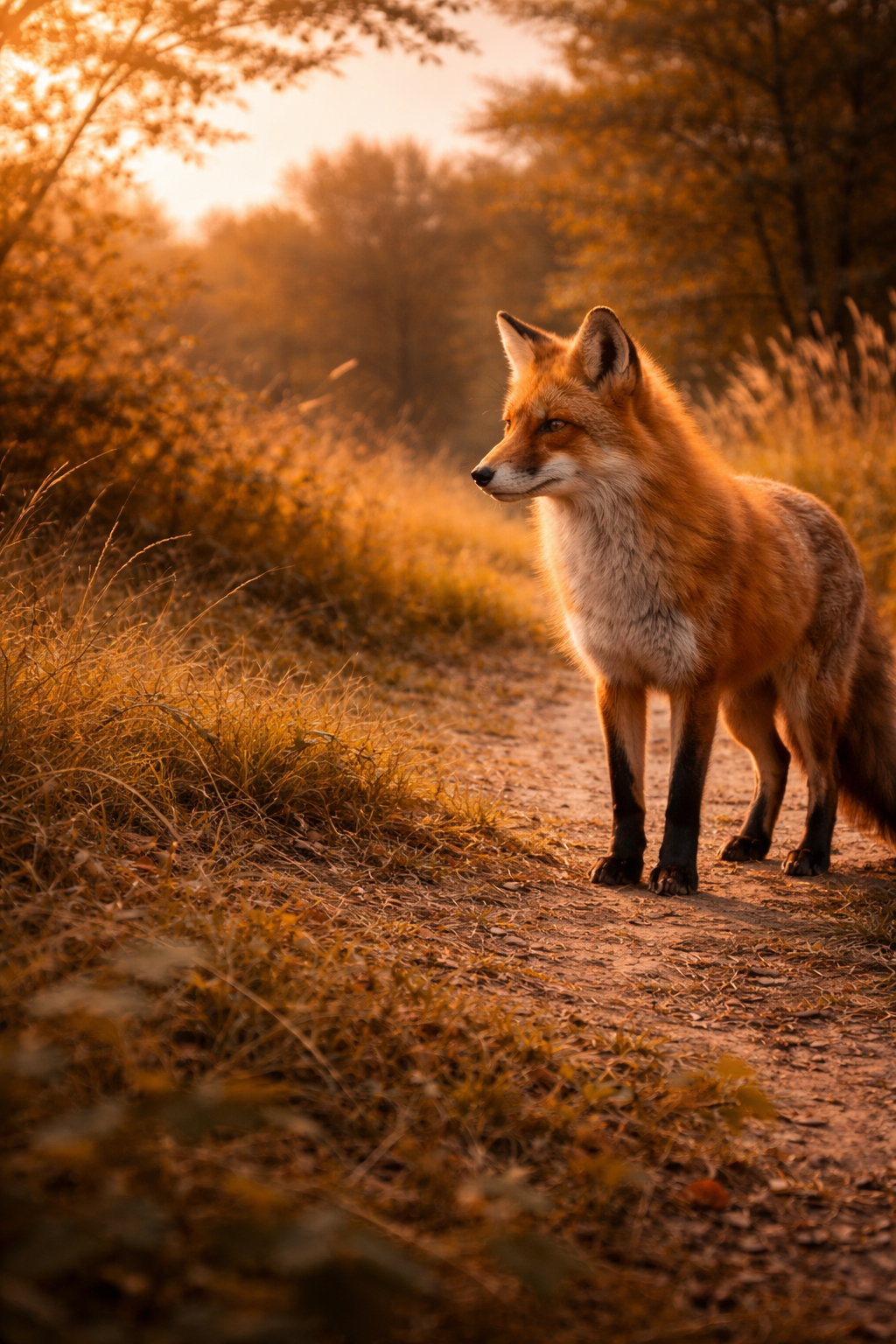
The Life Stages of a Red Fox
Red foxes develop rapidly — they have to. A wild fox's life is short and demanding, and the window between helpless kit and independent hunter closes quickly. Kits are born in spring, underground in a den (called an earth), and are entirely dependent for their first month. By autumn they are fully independent. The transition from blind, helpless newborn to skilled, solitary hunter in just six months is one of the most compressed developmental arcs of any carnivore.
Red Fox Age to Human Years Conversion Table
| Fox Age | Wild Fox | Urban Fox | Captive Fox | Life Stage |
|---|---|---|---|---|
| Birth | Newborn | Newborn | Newborn | Newborn kit |
| 1 month | ~5 yrs | ~5 yrs | ~3 yrs | Eyes open; exploring den |
| 3 months | ~12 yrs | ~11 yrs | ~7 yrs | Juvenile; learning to hunt |
| 6 months | ~18 yrs | ~17 yrs | ~12 yrs | Sub-adult; dispersing |
| 1 year | ~28 yrs | ~26 yrs | ~18 yrs | Young adult; first breeding |
| 2 years | ~42 yrs | ~40 yrs | ~26 yrs | Prime adult |
| 4 years | ~68 yrs | ~62 yrs | ~40 yrs | Senior (wild); mature (captive) |
| 8 years | Elder | Elder | ~60 yrs | Rare wild; mature captive |
| 14 years | — | — | ~88 yrs | Captive record territory |
🦊 Urban foxes live slightly longer than rural foxes on average — not because cities are safer (vehicle collisions are a major cause of death) but because food is more reliable and mange, while still present, is less frequently fatal with proximity to human habitation sometimes enabling treatment. The Mammal Society estimates the UK fox population at around 357,000 adults, with annual mortality rates in urban populations of around 50% — meaning most foxes don't survive their second year in the wild.
Things About Red Foxes That Will Actually Surprise You
🦊 A group of foxes is called a skulk or an earth. A male fox is a dog fox or reynard. A female is a vixen. Young are kits, cubs, or pups. The fox's distinctive vertical slit pupils — shared with cats but not dogs — allow excellent low-light vision for crepuscular and nocturnal hunting, while the tapetum lucidum behind the retina (the layer that makes eyes glow in torchlight) amplifies available light in near-darkness.
Fox Species of the World
There are 12 "true fox" species in the genus Vulpes, plus several other canids commonly called foxes. Here are the most notable.
| Species | Range | Size | Notable Trait | Wild Lifespan |
|---|---|---|---|---|
| Red Fox | Worldwide (introduced in Aus.) | 3.6–8.7 kg | Largest range of any wild carnivore | 3–5 yrs |
| Arctic Fox | Arctic tundra worldwide | 2.5–9 kg | Coat changes white in winter; survives −70°C | 3–6 yrs |
| Fennec Fox | Sahara Desert, N. Africa | 0.8–1.9 kg | Largest ears relative to body of any canid; desert specialist | 10 yrs |
| Swift Fox | North American Great Plains | 1.8–3 kg | Fastest fox; up to 60 km/h | 3–6 yrs |
| Tibetan Sand Fox | Tibetan Plateau | 4–5.5 kg | Distinctive square, deadpan face; internet famous | ~8 yrs |
| Grey Fox | N. & C. America | 3.6–7 kg | Only canid that regularly climbs trees | 6–10 yrs |