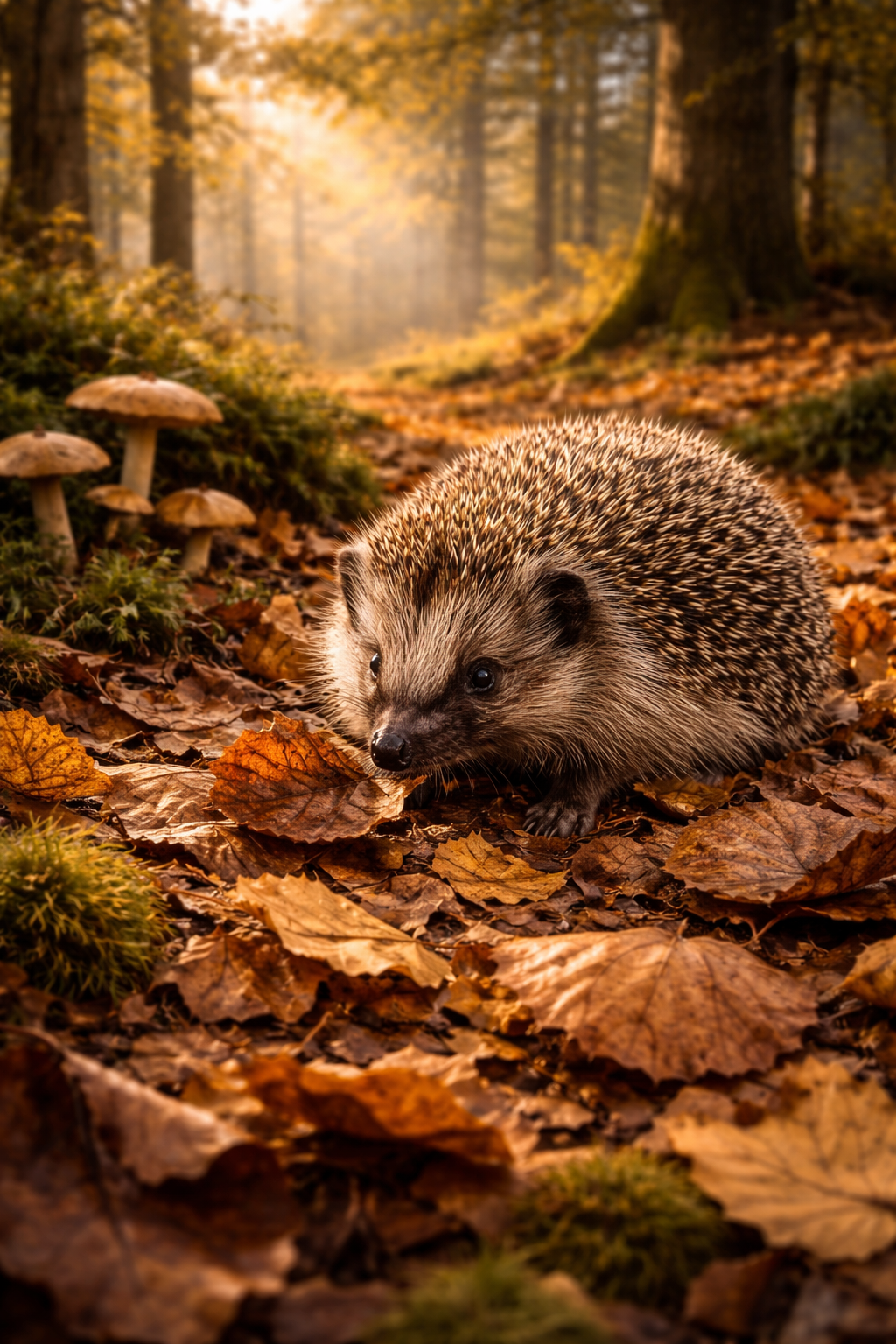
Hedgehog Age to Human Years — Full Table
Hedgehogs age rapidly — a 3-year-old African pygmy hedgehog is approaching what we would consider senior years. Based on an average captive lifespan of 5 years.
| Hedgehog Age | African Pygmy (pet) | European (wild) | Life Stage |
|---|---|---|---|
| 3 months | ~8 yrs | ~9 yrs | Hoglet |
| 6 months | ~14 yrs | ~17 yrs | Juvenile |
| 1 year | ~22 yrs | ~27 yrs | Young adult |
| 2 years | ~36 yrs | ~46 yrs | Prime adult |
| 3 years | ~50 yrs | ~66 yrs | Mature / Senior (wild) |
| 4 years | ~62 yrs | ~80 yrs | Senior (pet) / Elder (wild) |
| 6 years | ~80 yrs | Exceptional | Elder (pet) |
| 9 years | Record territory | — | Extraordinary |
🦔 The oldest verified pet hedgehog was Bertie, owned by Mark Tebb of Silkstone, South Yorkshire, UK, who lived to 9 years and 6 months and was recognised by Guinness World Records. Most African pygmy hedgehogs live 4–6 years; those reaching 8+ are genuinely exceptional. Wild European hedgehogs typically live 3–5 years, though individuals reaching 8–10 years have been documented in suburban environments with less predation pressure and more reliable food access.
The Life Stages of a Hedgehog
Hedgehogs are solitary, nocturnal, and have changed remarkably little in 15 million years — a testament to the effectiveness of their basic design. Their developmental milestones are rapid in early life and their lifespan is short, but the combination of 5,000+ individually controlled quills, toxin immunity, and hibernation capability makes them one of the most self-sufficient small mammals in European ecosystems.
Things About Hedgehogs That Will Actually Surprise You
Hedgehog Species — Wild & Pet
There are 17 recognised hedgehog species across Europe, Africa, and Asia. The African pygmy hedgehog dominates the pet trade; the European hedgehog is the most studied wild species. Here is how the main species compare.
| Species | Range | Weight | Captive Lifespan | Wild Lifespan | Notes |
|---|---|---|---|---|---|
| African Pygmy Atelerix albiventris | Central/East Africa | 250–400g | 4–6 yrs | 2–3 yrs | Most common pet species worldwide; does not hibernate |
| European Hedgehog Erinaceus europaeus | W. Europe, UK | 400–1,200g | 6–10 yrs | 3–5 yrs | Protected species in UK; road mortality crisis; true hibernator |
| North African Hedgehog Atelerix algirus | N. Africa, S. Spain | 400–700g | 4–6 yrs | 2–4 yrs | Occasionally kept as pet; sometimes hybridises with European |
| Indian Long-Eared Hemiechinus collaris | Indian subcontinent | 200–400g | 3–6 yrs | 2–3 yrs | Distinctive large ears; desert-adapted; not widely kept |
| Egyptian Long-Eared Hemiechinus auritus | N. Africa, Middle East | 250–450g | 3–7 yrs | 2–3 yrs | Kept as pet in some regions; large ears for heat dissipation |
| Amur Hedgehog Erinaceus amurensis | Russia, China, Korea | 600–1,000g | 4–7 yrs | 3–5 yrs | Cold-climate species; true hibernator; not kept as pets |
🦔 The European hedgehog is a protected species under the Wildlife and Countryside Act 1981 in the UK — it is illegal to kill, injure, or take one from the wild. Despite this protection, the population has declined from an estimated 30 million in the 1950s to fewer than 1 million today according to the British Hedgehog Preservation Society. It is now classified as Vulnerable on the GB Red List for Mammals.