Axolotl Age to Human Years — Full Table
Based on captive axolotl lifespan data. Axolotls in well-maintained aquaria typically live 10–15 years, with the oldest recorded individuals reaching around 20 years.
| Axolotl Age | Human Equivalent | Life Stage | What's Happening |
|---|---|---|---|
| 6 months | ~4 yrs | Juvenile | Growing fast, still developing features |
| 1 year | ~7 yrs | Young adult | Approaching sexual maturity |
| 2 years | ~14 yrs | Young adult | Fully sexually mature, in good health |
| 4 years | ~26 yrs | Prime adult | Peak of life — fully grown, active |
| 6 years | ~38 yrs | Prime adult | Established, thriving |
| 8 years | ~49 yrs | Mature | Middle age — health monitoring important |
| 10 years | ~60 yrs | Senior | Senior — reduced activity, careful care needed |
| 12 years | ~70 yrs | Senior | Exceptional — few reach this age |
| 15 years | ~82 yrs | Elder | Extraordinary longevity |
| 20 years | ~96 yrs | Elder | Record territory — maximum known lifespan |
Things About Axolotls That Will Actually Surprise You
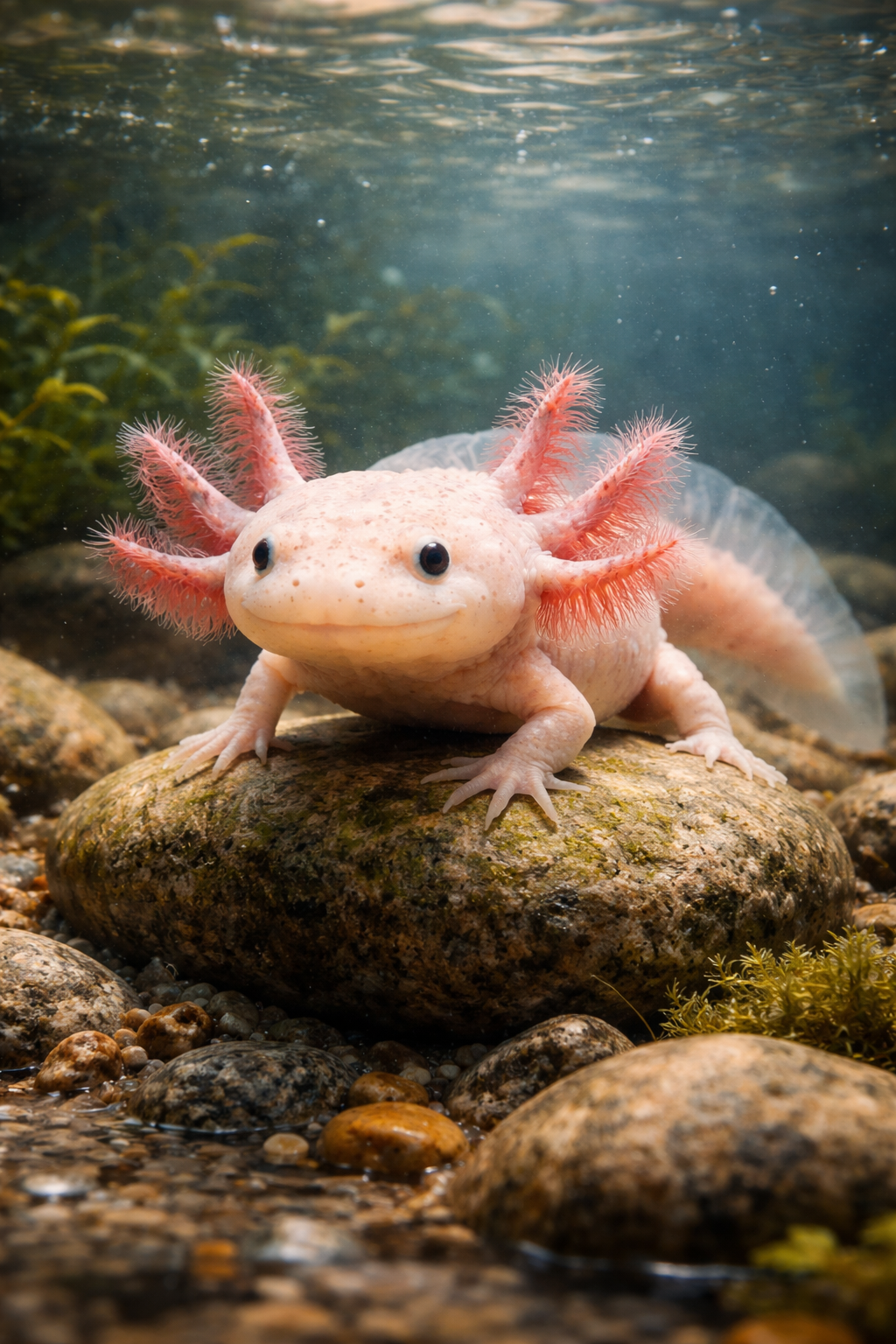
🦎 Despite being Critically Endangered in the wild, the axolotl is one of the most popular exotic pets in the world and a hugely important research animal — used in laboratories studying regeneration, embryology, and genetics. The IUCN notes a painful irony: the species is thriving in captivity while teetering on the edge of extinction in its only native habitat.
How We Calculate Axolotl Age
Our calculator uses proportional lifespan mapping based on captive axolotl lifespan data. Axolotls reach sexual maturity at approximately 12–18 months, grow relatively slowly, and in good care reach 10–15 years. Optimal conditions — consistent cold water (around 16°C), good filtration, and proper diet — can extend lifespans toward 20 years.
Wild axolotl lifespan data is largely unavailable because wild populations are so small and declining that systematic age studies are impractical. All lifespan data used here is from captive individuals.